
Emergency Chimney Sweep Near Me: What Hampton Homeowners Should Do First
If you’ve had a chimney fire – even a small one you weren’t sure was happening – the fireplace must stay cold until a licensed sweep does a post-fire inspection. Using it once after an undetected chimney fire is one of the leading causes of house fires in Hampton’s older neighborhoods. The sequence matters: stop burning, check for smoke or CO, document what you see, then call. If you’d rather not work through that checklist alone, call (833) 572-0756.
What Actually Counts as a Chimney Emergency?
Four situations are true emergencies that mean stop using the fireplace now. Everything else can wait for a scheduled appointment, and knowing the difference keeps you from panicking over a problem that isn’t urgent.
The four emergency scenarios:
- You suspect a chimney fire happened. A loud roaring sound, popping, a sudden rush of smoke into the room, or creosote flakes on the roof are warning signs. Even if it burned itself out, the flue can be cracked or the liner warped. No fire until it’s inspected.
- Smoke is backing into the living space during a normal burn. Some puff on a cold start is normal. A steady stream of smoke into the room is not, and points to a blocked flue, a failed liner, or a draft problem that can push carbon monoxide indoors.
- Visible structural damage after a storm or earthquake. Cracked crown, displaced bricks, a leaning stack, or a cap knocked loose. A damaged chimney can drop debris into the flue or let water and animals in.
- A carbon monoxide alarm sounds while the fireplace or wood stove is in use. Get everyone outside and call 911. Do not relight until a sweep has cleared the system.
A cracked firebox brick, a dirty flue, or a missing cap with no active burning and no CO alarm is not urgent. That’s a scheduled appointment, not a middle-of-the-night call. Getting this distinction right in Hampton means you’re not paying for an emergency visit you don’t need, and you’re not sitting on a real hazard.
The Stop-Use Decision Tree
Close the damper and stop all fires immediately in three cases: you smell smoke in the house during or after a burn, you’ve had any sign of a chimney fire, or your CO alarm has gone off. Close the glass doors, shut the damper once the fire is fully out, and don’t relight until a sweep has been out.
When it’s safe to operate at reduced capacity while you wait for an inspection:
- The chimney is dirty but drafting normally with no smoke rollback.
- A cap is loose but the flue is intact and nothing has fallen in.
- You notice a small crack in the firebox mortar with no smoke escaping into the room.
In those cases, burn smaller, hotter fires with dry, seasoned wood and keep the damper fully open. A smoldering fire produces more creosote, which is exactly what you don’t want in a flue you already know is compromised. Skip the paper and cardboard, and don’t overload the firebox.
The line we draw in our experience: if you can’t tell whether the smoke you smell is coming from the firebox or drifting through the house, treat it as the emergency case. Err on the side of closing it down. Relighting a fire after an undetected chimney fire is how a contained problem becomes a structural loss.
What Hampton Fire Department Reports as the Most Common Trigger
Fire departments across the country, including Hampton’s, consistently point to creosote buildup as the most common chimney fire trigger. Creosote is the tar-like residue left by wood smoke. It builds up on the flue walls, and when it ignites it burns hot enough to crack tiles, warp a metal liner, and spread into the framing.
The homeowner action that would have prevented most of those fires is simple: an annual sweep before the heating season starts. Not after a scare. Before. A flue that looks fine from the fireplace opening can carry a thick glaze of creosote higher up, and that’s what a camera inspection finds. Homeowners in Hampton who burn regularly, especially in older homes with original clay tile liners, are the ones who most need that pre-season look.
The second preventable trigger is a blocked or damaged flue cap. Birds, squirrels, and leaves get in through a missing cap, and a blocked flue pushes smoke and CO back into the house instead of up and out. Gelco and Copperfield caps and covers are what we reach for to close that gap properly, sized to the flue rather than whatever fits.
Skipping the sweep doesn’t just risk a fire. It risks your insurance claim, since a carrier can ask whether the chimney was maintained. A sweep before burning season is cheaper than a rebuild.
What a Legitimate Emergency Sweep Does in the First 30 Minutes
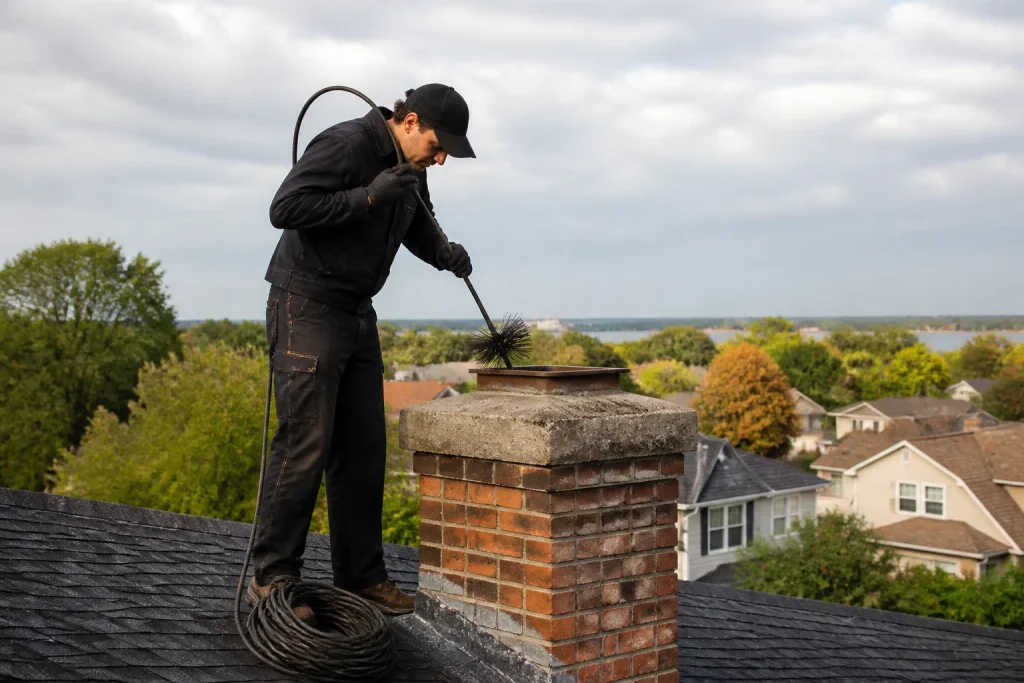
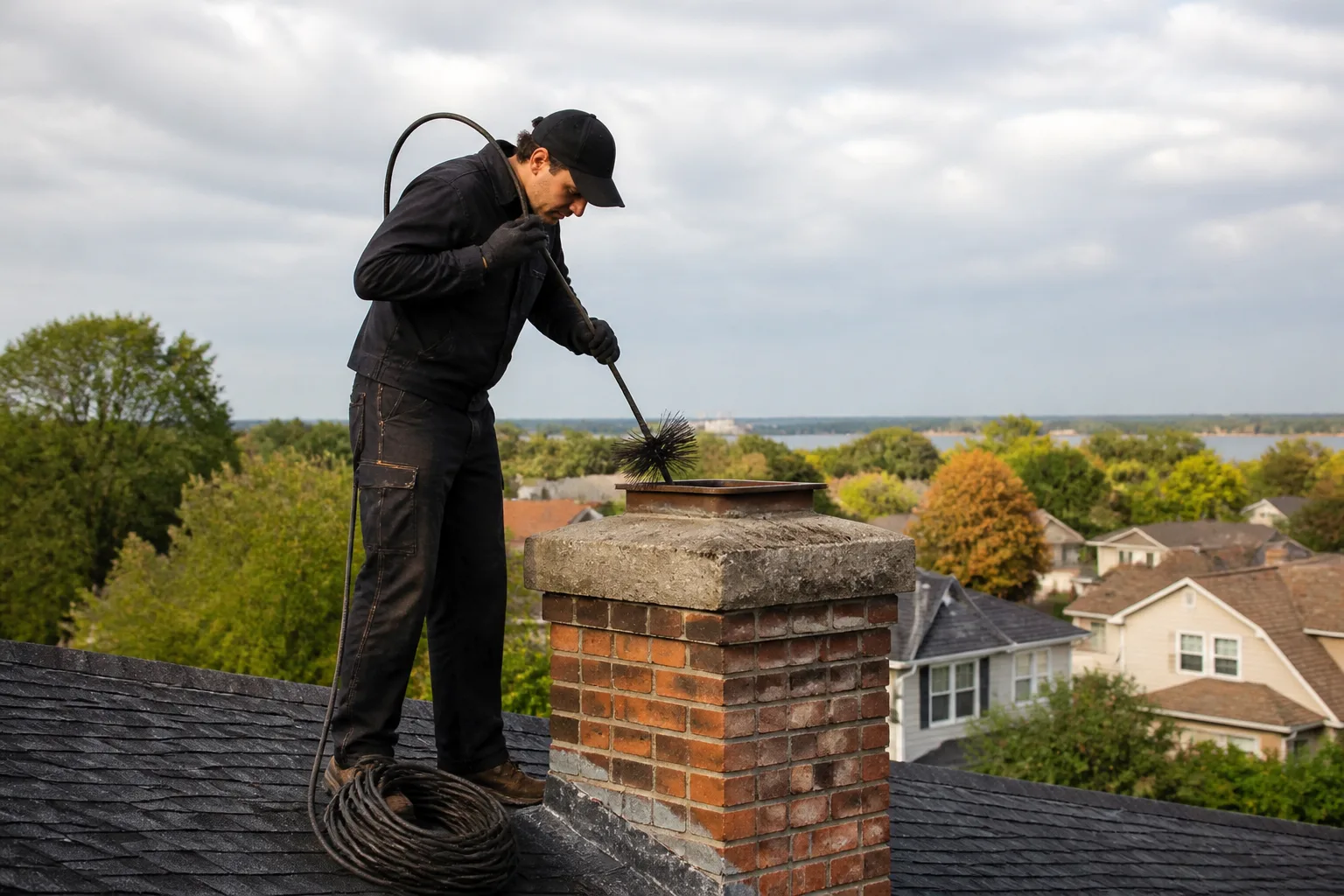
A real emergency sweep starts with a safety assessment, not a brush. In the first half hour, a qualified technician should be checking the flue for blockage, inspecting the firebox and smoke chamber, looking for signs of a prior fire, and testing draft. That tells them whether the system can be cleaned safely or needs to be shut down until repairs are made.
What separates a proper callout from a rushed job:
- They look before they brush. Running a brush down a flue that just had a fire, without checking for damage first, can knock loose debris or damaged liner material into the smoke chamber and create a bigger problem.
- They use a camera. A visual check of the firebox isn’t enough. A camera inspection shows the flue walls, joints, and any gaps you can’t see standing in the room.
- They tell you what level of inspection was done. Not “we looked at it” but “this was a Level 2 inspection, here’s what we found.”
- They recommend repairs based on evidence. If the chimney needs a new liner, they show you the photo. If it needs resurfacing, they explain why, and HeatShield is one option for restoring deteriorating mortar joints without a full tear-out.
A rushed job skips the camera, recommends thousands in work with nothing to back it up, and leaves you with a report you can’t verify. We name the materials we use because that’s how you know the recommendation matches the problem.
How to Document It for Your Insurance Claim
Documenting a chimney problem for insurance comes down to photos, a written inspection report, and the right inspection level. Carriers handling chimney damage claims generally want a Level 2 inspection report, which includes a camera scan of the flue, not just a from-the-floor look.
What to capture before anyone cleans anything:
- Photos of the firebox interior, the damper, and any visible smoke staining on the surround or mantel.
- Photos of the exterior stack, crown, and cap from the ground or roof if it’s safe to reach.
- Any creosote flakes, soot patterns, or debris on the roof or in the firebox.
- The written inspection report with the inspection level stated and the findings spelled out.
Keep the report even if you don’t file a claim right away. If a chimney fire damaged the liner and you discover it months later, the dated paperwork is what connects the damage to a covered event. That’s one reason we put findings in writing with photos attached: it protects you with your carrier and it means nobody has to take our word for what’s inside your flue.
Whether you’re in Phoebus, Buckroe, or anywhere else around Hampton, the same rule applies: get the evidence before the work starts.
When to Call a Pro
Call a pro now if any of the four emergency scenarios applies: a suspected chimney fire, smoke backing into the room, visible structural damage, or a CO alarm. Call to book an appointment if the chimney is due for its annual sweep, the cap is loose, or you notice a hairline crack you want checked before winter.
Some of this you can handle yourself. Scheduling the sweep and closing the damper when something’s wrong, yes. Climbing onto a roof to inspect a crown, or pulling apart a firebox to check the liner joints, is not a job for a homeowner. Falls from roofs and hidden cracks behind brick are how people get hurt, and a chimney fire you can’t see is how houses get lost. A trained sweep with a camera finds what you can’t.
Our technicians have up to 9 years of experience, and we work the full loop: a chimney sweep, an inspection, and the chimney repair that follows. For a liner that’s too far gone, DuraFlex liner systems handle the full reline. Know what’s inside your chimney before winter hits.
Related services in Hampton: chimney sweeping, chimney inspection, and chimney repair, all handled by Chimney Sweep Hampton under one company.
The Bottom Line
The short version: if you’ve had a chimney fire or see smoke backing in, stop burning and get an inspection before you light another fire. If it’s just a dirty flue or a loose cap and nothing’s actively wrong, book a regular appointment and don’t rush it. Document what you see, ask for the inspection level and the photos, and don’t accept a repair recommendation you can’t see evidence for.
If you’re in Hampton and need help, Chimney Sweep Hampton offers free estimates. Call (833) 572-0756. We answer 24/7. Fast dispatch from 7am to 7pm, Sunday through Friday. The estimate is free and the price is set per job by the written estimate.
Frequently Asked Questions
Most standard sweeps run in a typical range, and any repair discovered during the inspection is priced separately in a written estimate. We don’t quote a number over the phone for emergency work because it depends on what the camera finds. The written estimate sets the final price, and the estimate itself is free. Call (833) 572-0756 for an exact quote.
Yes. Even a small fire you weren’t sure was happening can crack a liner or warp tiles, and a second fire through damaged flue material is how a contained problem turns into a house fire. Keep it cold until a licensed sweep has done a post-fire inspection. Call (833) 572-0756 to book one.
Most carriers handling chimney damage claims want a Level 2 inspection report, which includes a camera scan of the flue. Ask for the level to be stated in writing along with the findings and photos, because that paperwork is what supports the claim. Call (833) 572-0756 if you need that documented.
We book emergency inspections as soon as we can. We answer 24/7, and our dispatch hours are 7am to 7pm, Sunday through Friday; a call outside those hours is booked into the next opening. If you smell smoke or your CO alarm has gone off, get everyone outside and call 911 first, then call us at (833) 572-0756.
Written by the team at Chimney Sweep Hampton.
Need Chimney Cleaning Help?
Call Chimney Sweep Hampton - licensed & insured, here with fast help in Hampton.
(833) 572-0756