
How to Choose the Right Chimney Cleaning Company in Hampton
CSIA certification tells you a technician passed a written exam. It doesn’t tell you whether they can tell the difference between Stage 2 and Stage 3 creosote, whether the liner resurfacing product they want to sell you is right for your flue tile condition, or whether the cap they’re bolting on will survive three Hampton winters before the paint fails and the rust starts. Those are the questions that actually decide who you hire. Here’s how to ask them.
The short answer: hire a company that can name its materials, explain its inspection level, and show you what it found on camera before it quotes anything. If you’d rather skip the filtering and get an answer, call (833) 572-0756.
What Should You Ask Before You Book Any Hampton Chimney Company?
Five questions separate the specialists from the generalists, and none of them are about price. Ask these before you hand over a credit card or agree to a date. A company that answers them clearly is telling you something real about how it works.
- What level of inspection do you perform, and will I get it in writing? A basic sweep visit should involve a visual inspection of accessible components. If the company can’t tell you what standard they work to, they’re guessing.
- Do you use a camera, and will I see the footage? A chimney in Hampton is a hidden structure. Anyone who quotes repair work without a camera is asking you to trust their eyes from eight feet below.
- What products do you stock, and why those? This is the question almost nobody asks, and it’s the most revealing. Companies that buy whatever’s cheapest at the supply house can’t tell you why a DuraFlex liner suits a given flue, or where HeatShield resurfacing makes sense versus a full reline.
- What’s excluded from the estimate? Caps, dampers, crown repair, and masonry work often sit outside a sweep quote. Get it in writing.
- Can you tell me what type of chimney system I have? A masonry flue on a 1920s build is a different animal from a modern prefab insert. A specialist knows the difference before they climb the roof, not after.
Notice that none of these are “how many stars do you have on Google.” Reviews are a reasonable starting filter. They are not a substitute for asking the question that separates a tradesperson from a generalist.
Why Naming Specific Product Lines Signals Competence
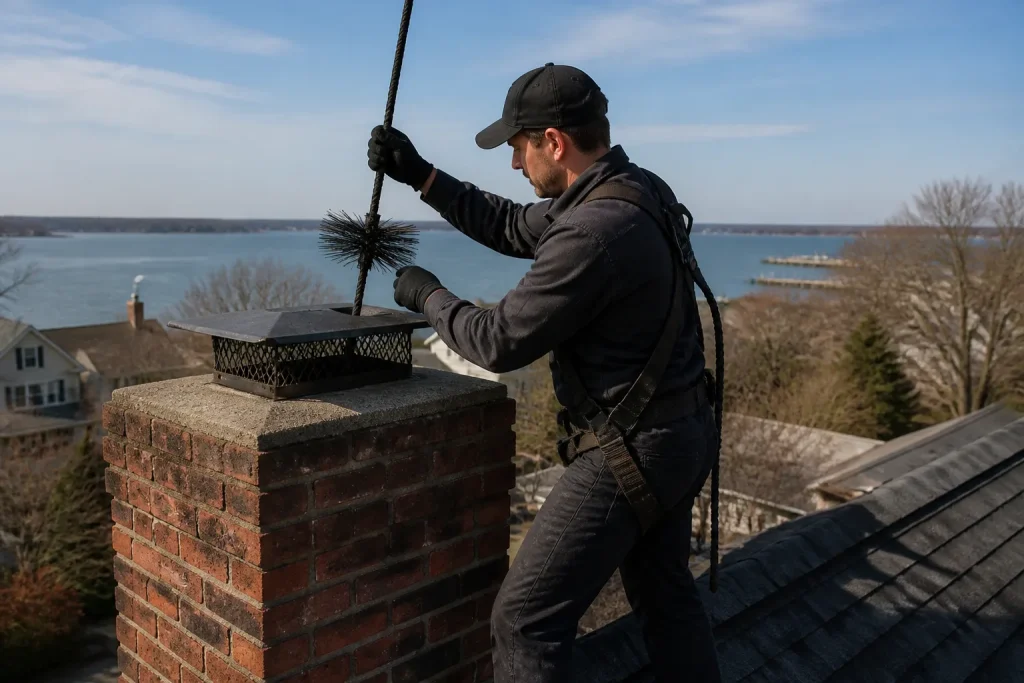
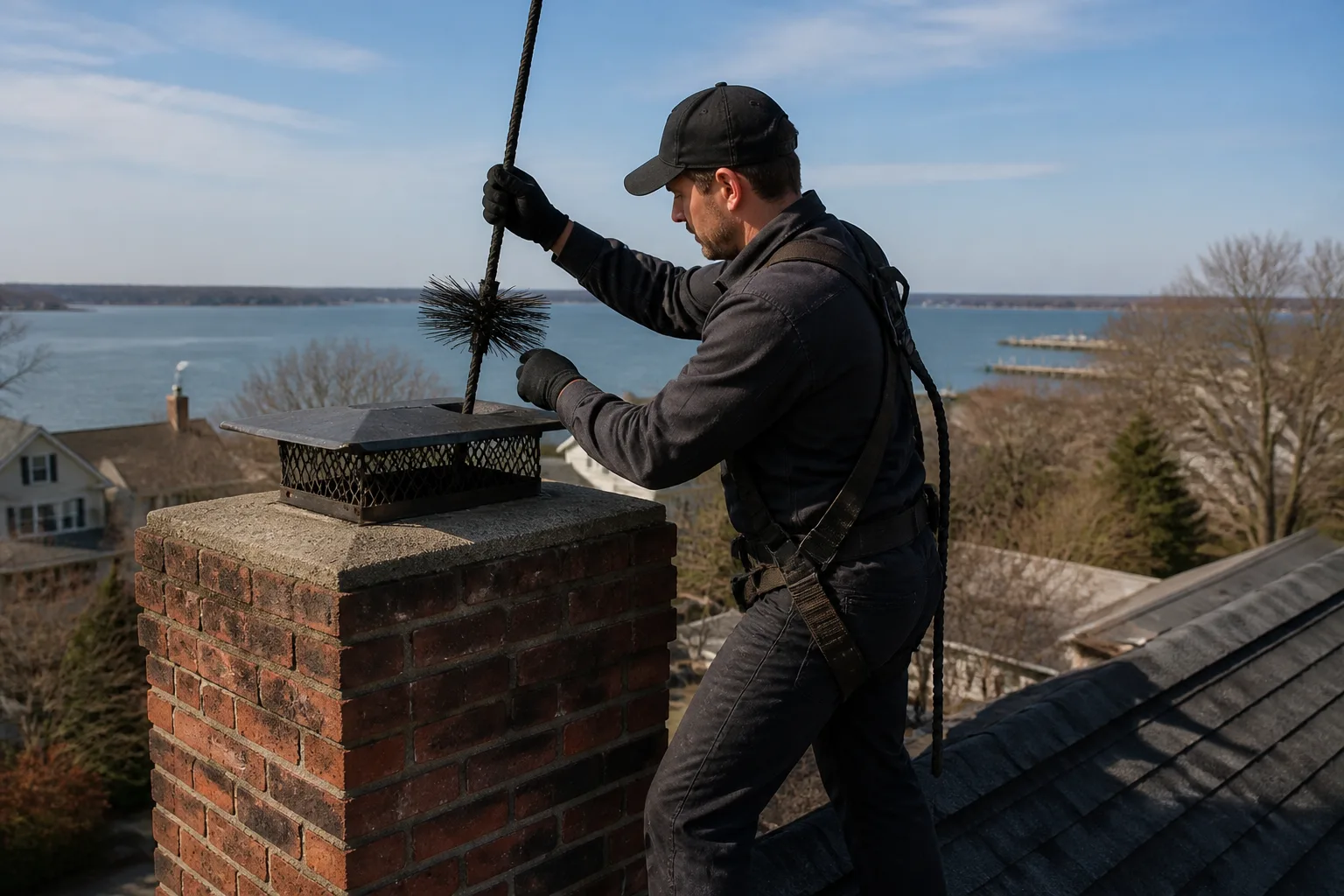
Anyone can buy a chimney brush and a Shop-Vac. That’s the entire toolkit some operators bring to a job, and it shows when they encounter a real problem. The difference is materials knowledge: knowing which liner system fits a given flue, whether resurfacing is viable, and what kind of cap will hold up to a decade of Virginia humidity and freeze-thaw cycling.
We work with a defined roster of professional-grade products: DuraFlex for liner systems, HeatShield for flue resurfacing, Olympia Chimney and Gelco for caps, covers, and venting components. Those aren’t random choices. Each one addresses a specific condition we run into in Hampton homes.
- HeatShield is relevant when a flue tile has deteriorating mortar joints but the tile itself is still sound. It allows resurfacing rather than full liner replacement, which is a meaningful difference in both scope and cost.
- DuraFlex comes into play when the flue needs a full reline. That’s a structural job, not a maintenance task, and it requires a company equipped to do it rather than subcontract it out.
- Olympia Chimney and Gelco cover the top of the system. A cap that rusts out in three seasons is worse than no cap at all if it starts shedding into the flue.
A company that can explain its product choices, and why they picked them for your specific chimney, is demonstrating trade expertise. One that can’t probably isn’t stocking them.
What Should a Written Chimney Estimate Actually Contain?
Scope specificity, materials called out by name and grade, and a clear list of exclusions. That’s the standard. If the estimate says “clean and inspect chimney,” that’s not an estimate; that’s a placeholder. You need to know what’s being done, to what, and what happens if the technician finds something the original quote didn’t anticipate.
A useful written estimate for a Hampton chimney job includes:
- The inspection level performed and what was found, in plain language
- The sweep method (rotary, brush, or other) and what protection is used inside the home
- Any recommended repairs or upgrades, with the specific product named
- What the price covers, and the final price is set by the written estimate, not a verbal range
- What’s explicitly excluded, so caps, crowns, and masonry work don’t appear as surprises
- Photo or camera evidence of the condition that drove any repair recommendation
That last point matters more than any other. You should never be asked to approve liner or masonry work you can’t verify yourself. If we recommend a repair, the camera footage or photo report supports it. And if the work can safely wait a season, we say so.
We’re a Chimney Sweep Hampton team, which means the sweep, the inspection, and any repair recommendation come from the same visit. You don’t get handed off to a second contractor for the reline.
The Red Flags That Tell You You’re Talking to a Generalist
A general handyman who adds chimney sweeps to the menu looks the same in the search results. On the job, they don’t. Here’s what separates them in practice.
- The call doesn’t include diagnostic questions. A specialist asks about your appliance type, when the chimney was last swept, whether you’ve noticed smoke drafting back, and what kind of cap you have. A generalist asks for the address and a time window.
- No camera, no photos, no written report. If the inspection is “it looks fine up there,” that’s not an inspection. A dedicated chimney sweep service brings a camera and shows you what it found.
- Can’t name a single product they’d use. Ask directly. “What liner would you install if this flue needed relining?” A company that can’t answer that isn’t a chimney company; it’s a cleaning service that occasionally touches chimneys.
- Pushes replacement without evidence. Full liner replacement is a substantial project. If it’s genuinely needed, you’ll see it on camera. If a company recommends it before the inspection is done, you’ve learned what you need to know.
- The truck doesn’t match the trade. A vehicle carrying chimney-specific equipment looks different from one that rolls with a ladder and a universal toolkit. It’s not a perfect signal, but it’s a real one.
None of this means generalists are dishonest. It means a chimney sweep is a specialized job performed on a structure where a mistake creates fire risk. You want a specialist.
Why Hampton’s Housing Mix Changes What You Hire For
Hampton has a mix of older colonial-era homes and newer builds, and that mix produces genuinely different chimney systems. A 1920s masonry chimney with clay tile flue liners needs inspection for mortar joint degradation and possibly HeatShield resurfacing before it needs a full reline. A newer home with a factory-built fireplace and insert has a different system entirely, and the inspection and maintenance requirements differ accordingly.
A company that arrives without asking what type of system you have before quoting is already behind. And if the answer to “do I need a new liner?” doesn’t change based on what they find in your flue, you’re not getting an inspection; you’re getting a sales script.
Wood-burning fireplaces, wood stoves, and gas appliances all require different inspection focus. A gas appliance needs a carbon monoxide check alongside the visual inspection. A wood stove running hard through a Virginia winter produces creosote at a rate that justifies a proper annual sweep. A company that treats them interchangeably isn’t doing the job right.
When to Call a Pro
Annual sweeping is the baseline. If you’re overdue, here’s what pushes it past maintenance and into a call today:
- Smoke drafting back into the room when the fireplace is lit
- A strong creosote or soot smell in the house, especially in summer
- Visible cracking or spalling on the chimney crown or exterior mortar
- Water staining inside the firebox or on the ceiling near the chimney
- A cap that’s loose, missing, or rusted through
Related services in Hampton: our chimney repair team handles caps, crowns, and liner work, and we can tell you during the sweep whether repair is actually needed. If you’re in Hampton and want an honest read on your chimney’s condition, that’s exactly what we do.
The Bottom Line
Certification and star ratings are a reasonable floor, not a ceiling. The company that earns your business will tell you what inspection level they perform, use a camera, produce a written report, and name the specific products they’d use because they actually use them. They will also tell you when work can wait. Our technicians have up to 9 years of experience, and we work with DuraFlex, HeatShield, Olympia Chimney, and Gelco because those products solve specific problems we see in Hampton chimneys.
If you’re in Hampton and need help, Chimney Sweep Hampton offers free estimates. Call (833) 572-0756. We answer 24/7. Fast dispatch from 7am to 7pm, Sunday through Friday.
Frequently Asked Questions
Most Hampton chimney sweep visits fall in the $150 to $350 range for a standard cleaning and visual inspection, with repairs or camera inspection adding to that depending on what’s found. The written estimate sets the final price. Call (833) 572-0756 for an exact quote. Estimates are free.
Only if the inspection shows it’s necessary, and you should see the evidence yourself before agreeing. HeatShield resurfacing can address deteriorating mortar joints in some cases without a full reline. If the flue tile is cracked or the liner has failed outright, DuraFlex relining is the appropriate fix. Nothing gets recommended without camera footage or a photo report you can review. Call (833) 572-0756 if you want a second opinion.
Once a year for most wood-burning fireplaces and stoves, and any time you’ve burned more than a cord of wood or notice creosote buildup. Gas appliances need an annual inspection even though there’s less soot to remove. Skipping years isn’t a savings plan; it’s a deferral of cost and risk. Call (833) 572-0756 to book.
Creosote accumulates in the flue, and at Stage 3 it’s a hardened, flammable glaze that a standard brush won’t remove. That’s a chimney fire risk, not a theoretical one. A blocked or damaged flue can also push carbon monoxide back into the home. Neither is worth deferring. Call (833) 572-0756 for a free estimate on a sweep and inspection.
Written by the team at Chimney Sweep Hampton.
Need Chimney Cleaning Help?
Call Chimney Sweep Hampton - licensed & insured, here with fast help in Hampton.
(833) 572-0756