
Last updated November 16, 2026
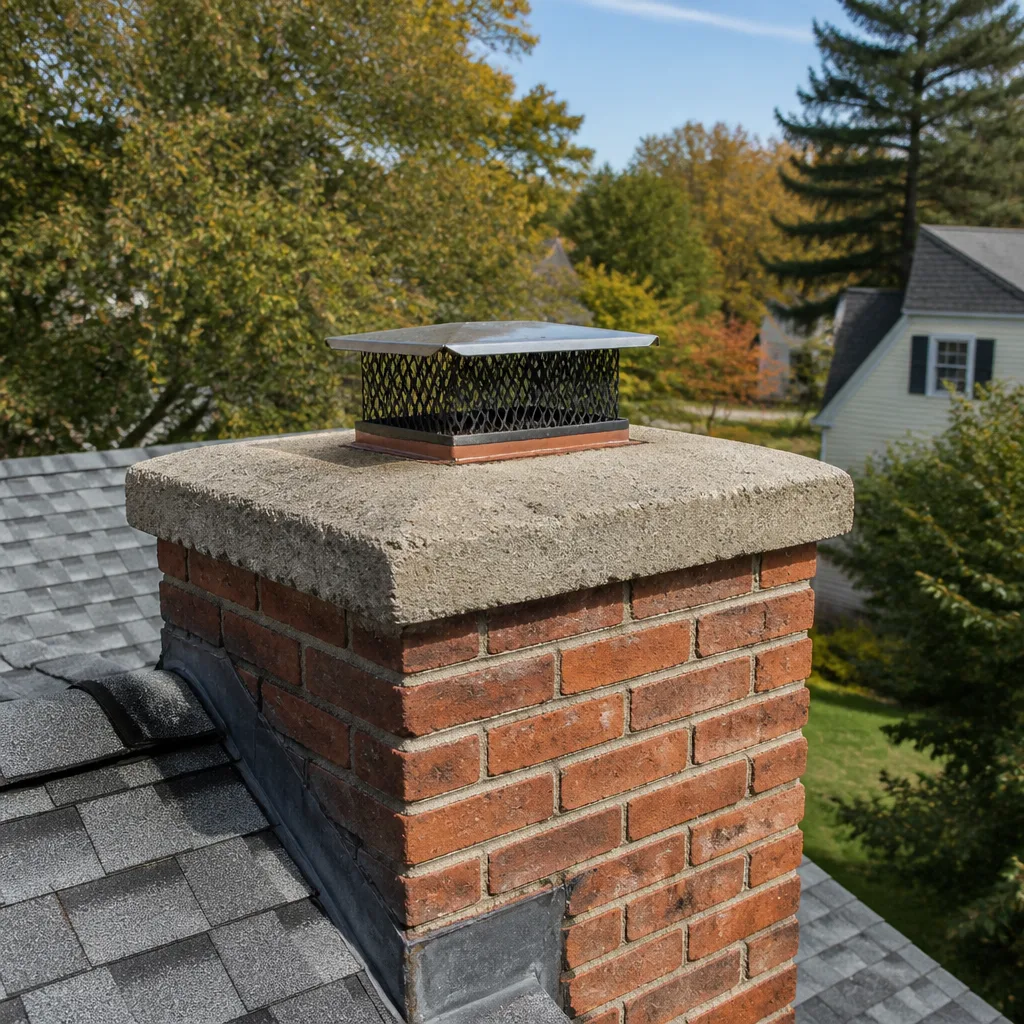 Sweep & inspection
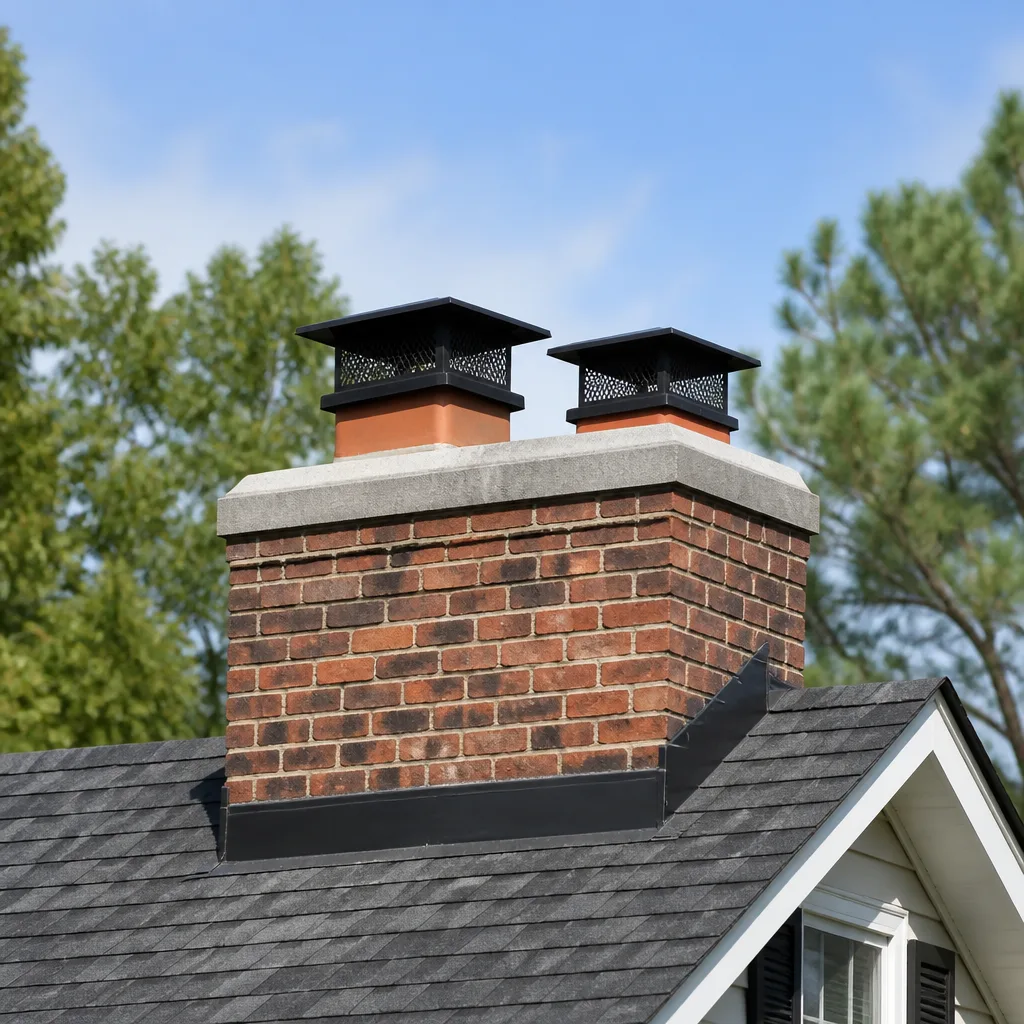 Caps & crowns
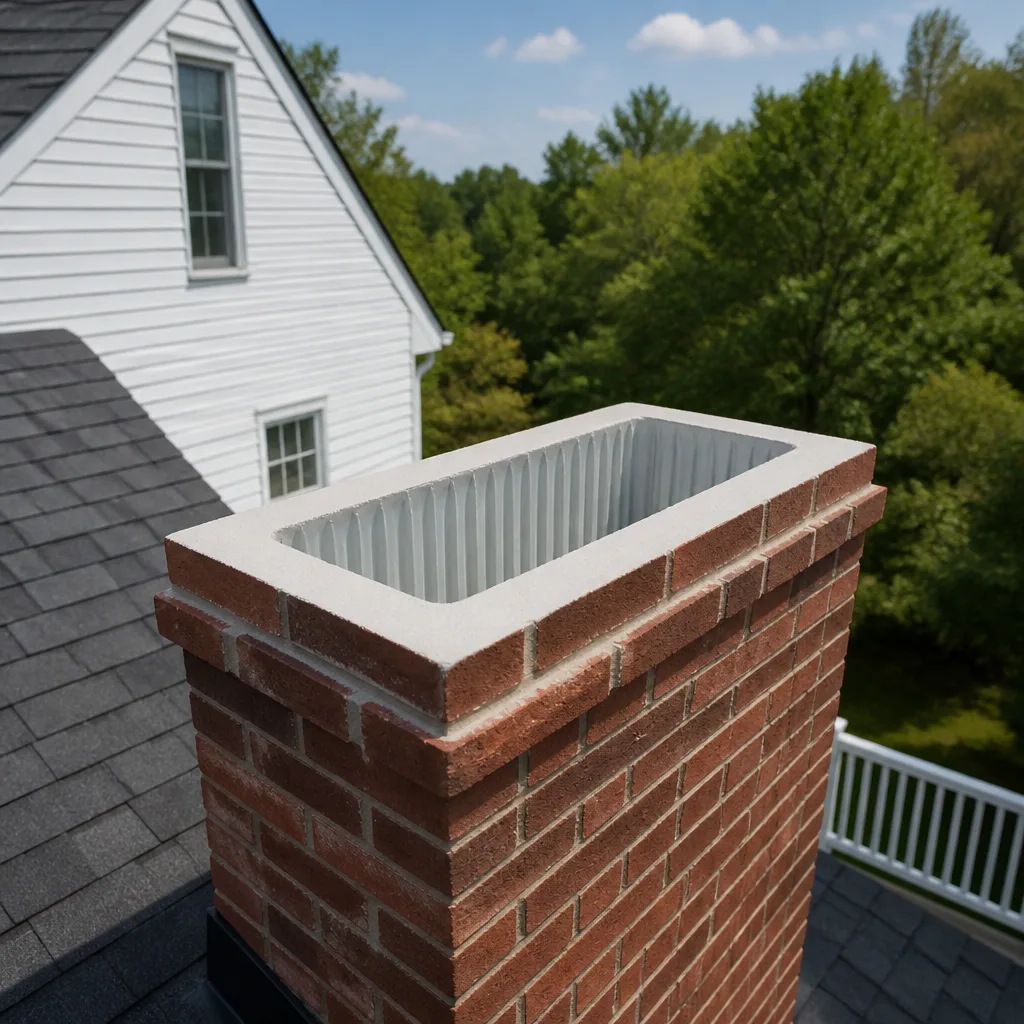 Flue relining
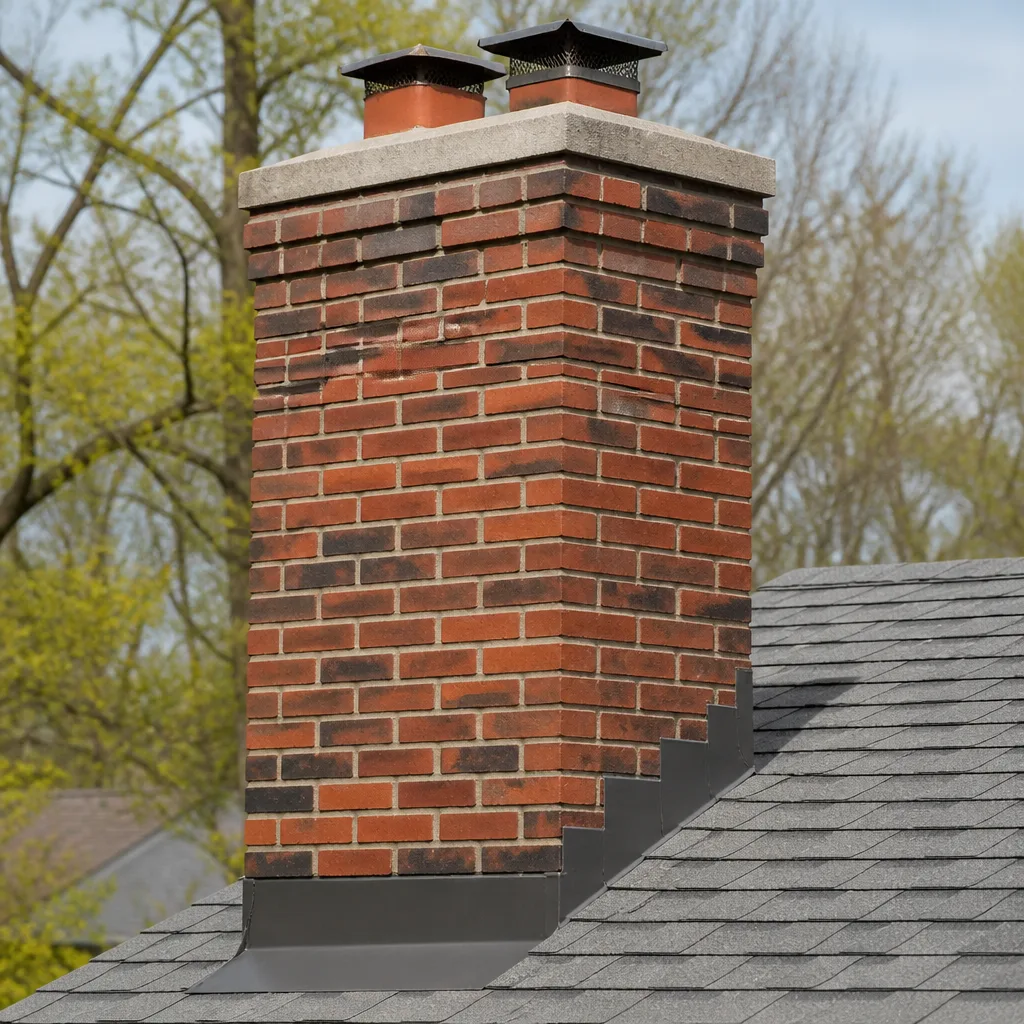 Masonry repair
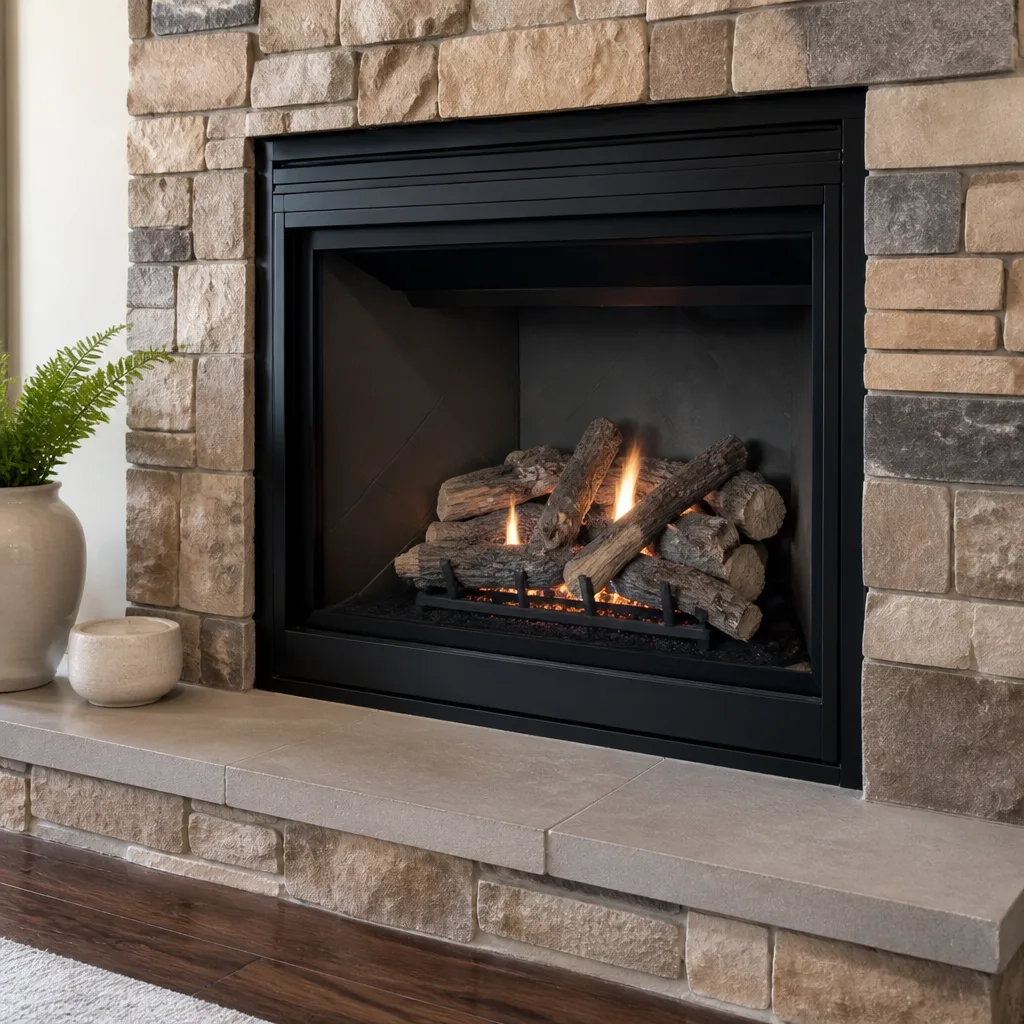 Gas fireplace service
Level 1 sweep and inspection to the NFPA 211 annual standard - flue, crown, cap, and flashing checked and photographed
Chimney sweep logs do not sweep chimneys. They loosen some creosote - which then falls where a brush and vacuum still have to collect it.
The Complete Guide to Chimney Cleaning in Hampton
Most chimney fires in Hampton don’t start because a homeowner ignored the chimney for twenty years. They start because the homeowner followed advice written for New England. In a climate where the fireplace runs hard from October to April, creosote builds in a slow, even layer. In Hampton, the burn season stops and starts, and that pattern creates creosote that glazes differently. Add humid summers that keep a flue damp between fires, and you have a chimney system with its own set of problems. This guide covers how Hampton chimneys actually age, what each level of inspection looks for, and how to read a sweep’s report so you know the work was thorough.
Quick Answer
A Hampton chimney should be swept once a year, ideally at the end of the burn season in late spring, and it should get a Level 2 inspection any time the appliance, fuel type, or liner condition has changed. Cleaning means removing creosote and soot from the flue, firebox, and smoke chamber, then confirming the liner and cap are intact. If your chimney hasn’t been looked at since last winter, book a sweep before fall.
Styles & brands we work with
- Sweep & inspection
- Caps & crowns
- Flue relining
- Masonry repair
- Gas fireplace service
Table of Contents
- Why Hampton Chimneys Age Differently
- The Stop-Start Burn Season and Creosote Stages
- Level 1, 2, and 3 Inspections: Which One Do You Need?
- What Rotary Cleaning Systems Do That Brush Kits Miss
- How to Read a Sweep’s Report
- How Often Should You Schedule Cleaning?
- What Chimney Cleaning Costs in Hampton
- What You Can Check Yourself and What You Shouldn’t
Why Hampton Chimneys Age Differently
Hampton sits in a humid, mild-winter climate. Summers run long and sticky, and the shoulder seasons stretch. That matters for a chimney more than most homeowners realize, because a flue only stays healthy when it dries out between fires. In a cold climate, a chimney gets used consistently for months, which keeps it hot and relatively dry. In Hampton, a chimney might burn for a week in December, sit idle for three weeks while the weather turns mild, then fire up again in January. Every one of those idle stretches is a chance for moisture to settle into the flue.
What accumulates during those down periods is a mix of things the average homeowner never sees:
- Condensation on the liner. Cool flue walls meet warm, humid air and water beads on the inside. Repeated wet-dry cycles work at mortar joints.
- Creosote that has absorbed moisture. Damp creosote is stickier and harder to remove with a hand brush. It also corrodes metal liners faster.
- Debris from trees and birds. Hampton’s tree canopy and mild climate keep nesting birds active for a long stretch of the year. A cap that’s missing or damaged lets them in.
- Soot that has crusted into the smoke chamber. The smoke chamber above the damper is where soot collects unevenly, and it’s the part most casual cleaning visits skip.
We work with a fixed set of professional-grade products, including Olympia Chimney components and Famco venting, because a Hampton chimney often needs a repair decision made on the same visit as the sweep. Knowing what’s available to fix a joint that’s started to spall matters more here than in a drier climate. If you’re in Hampton and your chimney is more than a decade old, this is the reason a yearly look is worth more than a decade of guessing.
The Stop-Start Burn Season and Creosote Stages
Creosote forms in three recognizable stages, and the stage depends on how the fire burned, not just how much wood you went through. Northern advice assumes a chimney runs consistently cold and slow, producing a lot of stage 2 and 3 creosote. Hampton’s burn pattern is different. Fires here tend to be hot and short, because the weather doesn’t demand a fire every night for five months. That produces a lighter, flakier stage 1 creosote more often than northern guides suggest. But the idle periods between fires let that flaky creosote absorb moisture, and that’s where the problem starts.
The three creosote stages, briefly
- Stage 1: Soot and light flake. Removed easily with a standard brush. This is what most Hampton chimneys show after a single mild season.
- Stage 2: Crusty and semi-glazed. Sticks to the flue wall. Needs rotary cleaning or chemical treatment to remove. Common when a Hampton chimney sits damp for a summer.
- Stage 3: Glazed and hardened. Glassy, hard, and highly flammable. Requires professional rotary tools and, in some cases, liner resurfacing. Less common here than in cold climates, but it happens in chimneys that see a lot of low, smoldering fires.
The takeaway for Hampton homeowners: don’t assume that because the fire was only lit twenty times this winter, the chimney is clean. The moisture cycles between those fires are what push stage 1 toward stage 2. A sweep who understands this will check for damp creosote and interior condensation, not just look down the flue and call it done. Chimneys that get used for gas appliances need a different check altogether, since gas produces acidic moisture instead of creosote. A good chimney sweep will ask what you burn before starting.
Level 1, 2, and 3 Inspections: Which One Do You Need?
The chimney industry recognizes three inspection levels, and the difference matters because they’re not interchangeable. Most Hampton homeowners need a Level 2 after a typical season, not the Level 1 that many quick sweep visits provide.
Level 1 inspection
A visual check of accessible parts: the firebox, damper, flue from the bottom, and the exterior of the chimney and cap. No camera, no tools, no access to concealed areas. This is appropriate for a chimney that’s been maintained yearly and had no changes to its appliance or fuel. It’s fast and it’s cheap, but it doesn’t see inside the flue.
Level 2 inspection
A camera-based inspection of the entire flue interior, including the smoke chamber and any offsets. Required any time there’s been a change to the chimney system: a new appliance, a change in fuel type, a chimney fire, a liner replacement, a property sale, or a major weather event. This is the level most Hampton chimneys benefit from annually, because the moisture cycles described above can cause internal damage the eye can’t catch from the firebox.
Level 3 inspection
Reserved for a suspected hidden problem, and it may involve opening a wall or removing part of the chimney structure. It’s the most invasive and the least common. If a Level 2 finds something serious that can’t be diagnosed from inside the flue, Level 3 is the next step.
- Level 1: routine annual check for a maintained chimney with no changes.
- Level 2: any change in appliance, fuel, liner condition, property sale, or suspected event.
- Level 3: only when a specific hidden problem needs to be diagnosed.
In our experience, a homeowner who has skipped a year or has never seen a camera report should book a Level 2. The extra time is what turns a vague “looks fine” into evidence you can review yourself.
What Rotary Cleaning Systems Do That Brush Kits Miss
A standard chimney brush on a rod works on a straight, clean flue. It doesn’t reach around offset sections, and it won’t remove stage 2 or stage 3 creosote. Professional rotary cleaning systems use a spinning head with interchangeable rods and links to reach the entire flue circumference, including the parts a straight-push brush skips. On a Hampton flue with damp creosote, this is often the difference between a surface pass and an actual clean.
What a proper rotary sweep covers
- Firebox and damper. Soot and ash removed, damper checked for operation.
- Smoke chamber. The sloped area above the damper where soot collects and where most casual cleaning stops. Rotary tools can reach the corners.
- Flue interior. Full-circumference contact through the whole length, including offsets.
- Cap and crown. Visual check for damage that lets water or animals in.
- Camera pass. The evidence you review afterward.
Rotary systems also let us work on liner surfaces that are starting to pit or spall. Where a liner shows early deterioration but is otherwise sound, resurfacing with a product like HeatShield can restore the interior wall without a full liner replacement. That’s a meaningful middle option that a general handyman who sweeps as an add-on won’t offer, because it requires knowing the material and having access to it. When a flue is done, the point isn’t that the tools were fancy. It’s that the job reached everywhere it needed to. The right liner for your system is the one that matches the flue you actually have, not the one that was easiest to install.
How to Read a Sweep’s Report
A chimney sweep report should give you enough information to make a decision without calling the person back and asking what they meant. Reports vary widely, so knowing what a thorough one includes helps you spot a surface-level visit. Here’s what to look for.
- Photos or video of the flue interior, before and after. This is the single most useful element. Ask for it if it isn’t offered.
- Creosote stage recorded. Stage 1, 2, or 3, with a location (flue, smoke chamber, cap, firebox).
- Liner condition described in specifics. “Liner intact” is not the same as “liner shows early spalling at the third joint.” Ask for the second version.
- Cap and crown status. Note whether the cap is present, intact, or missing.
- Any crack in the firebox or smoke chamber. These are structural issues, not cosmetic ones.
- A clear recommendation split into “must do” and “monitor.” A good report tells you what can safely wait. If everything is urgent, ask why.
The recommendation is where honesty shows. A worn damper gasket, for example, is a monitor item. A cracked smoke chamber is not. If a report doesn’t contain a camera image or a description specific enough to distinguish those two, ask for one before agreeing to any chimney repair work. Written estimates are what set the final price, so get the numbers in writing before the job starts.
How Often Should You Schedule Cleaning?
Once a year for most Hampton homeowners, and a second look if you notice any of the warning signs below. The one-year rule is standard because it’s long enough to catch real accumulation and short enough to prevent the worst of it. What changes the schedule is what you burn and how you burn it.
- Wood-burning fireplace, occasional use: once a year, ideally in late spring after the season ends.
- Wood stove used as a heat source: once a year, sometimes twice if burning for extended periods.
- Gas appliance: once a year for a safety inspection, even though creosote isn’t the issue. Gas appliances produce acidic moisture that attacks the liner.
- After any chimney fire, however small: immediately, and with a Level 2 inspection.
- After a property purchase: before the first fire.
Late spring is the smartest booking window in Hampton. The season is over, any damp creosote from the winter has had a chance to dry, and you have the full summer to schedule any repair work without racing the first cold snap. Waiting until October is a common mistake, and it means you’re calling at the same time as everyone else. Book the sweep before the weather turns.
What Chimney Cleaning Costs in Hampton
Chimney cleaning in Hampton typically runs in the low-to-mid triple digits for a standard sweep, more if the flue requires rotary removal of stage 2 or 3 creosote, and more again if a camera inspection or minor repair is included. The price is set per job by the written estimate, not by a flat rate quoted over the phone. Here’s how the line items usually break down:
- Standard sweep (Level 1 check included): entry-level pricing for a clean, maintained flue.
- Sweep with rotary cleaning for heavier creosote: higher, because more time and tools are involved.
- Level 2 camera inspection: added when recommended or requested.
- Liner resurfacing with HeatShield: priced separately from sweeping, and typically a fraction of a full reline.
- Full liner replacement: the largest line item, only recommended when the liner is genuinely beyond resurfacing.
The estimate is free and the written estimate sets the final price, so there’s no reason to guess. Ask for the report and the written numbers together. Call (833) 572-0756 for an exact quote. We answer 24/7, with fast dispatch from 7am to 7pm, Sunday through Friday.
What You Can Check Yourself and What You Shouldn’t
There’s a safe middle ground between “call a sweep every month” and “never look at the chimney.” A homeowner can inspect a few accessible things without tools or risk. Anything beyond that belongs with someone trained for it.
Safe to check yourself
- Cap presence. Look up from the ground. If the cap is missing, that’s a call.
- Visible smoke or draft problems. If the fire smokes into the room, stop burning and get an inspection.
- Damper operation. Open and close it, and note any sticking.
- Exterior signs of water. Look for staining or rust on the outside of the chimney.
Leave to a professional
Anything that involves the roof, the flue interior, or the liner. Chimney work is height work, and heights combine with soot and confined spaces in ways that cause real injuries. Never attempt to remove creosote or inspect the liner yourself, and don’t burn anything in the firebox if you smell gas or haven’t had the appliance checked. A trained technician has the right tools and the right view, and the safety margin matters.
Common Mistakes to Avoid
- Following a northern cleaning schedule. A homeowner who reads advice aimed at cold climates may over-clean in winter and skip the late-spring sweep that matters more here. The season ends in spring; that’s when Hampton chimneys need the look.
- Skipping the smoke chamber. A sweep who cleans only the flue and firebox leaves the most common soot-collection area untouched. Ask whether the smoke chamber is included.
- Assuming mild winter means mild buildup. The stop-start pattern can actually produce harder creosote because of moisture between burns. A short season is not a clean chimney.
- Accepting a verbal report. “Looks fine” isn’t a report. Ask for photos or video of the flue interior.
- Putting off a Level 2 after any change. New appliance, new fuel, chimney fire, property sale: all of these warrant a camera inspection, not a visual pass.
- Letting a missing cap go unfixed. An uncapped flue in Hampton’s tree-heavy neighborhoods invites birds and lets rain straight in. Fix the cap with the sweep, not a year later.
- Treating liner resurfacing as a full replacement. If a liner is only spalling, a HeatShield resurfacing can be the right call where a salesperson would push a reline. Ask for the camera evidence that supports either recommendation.
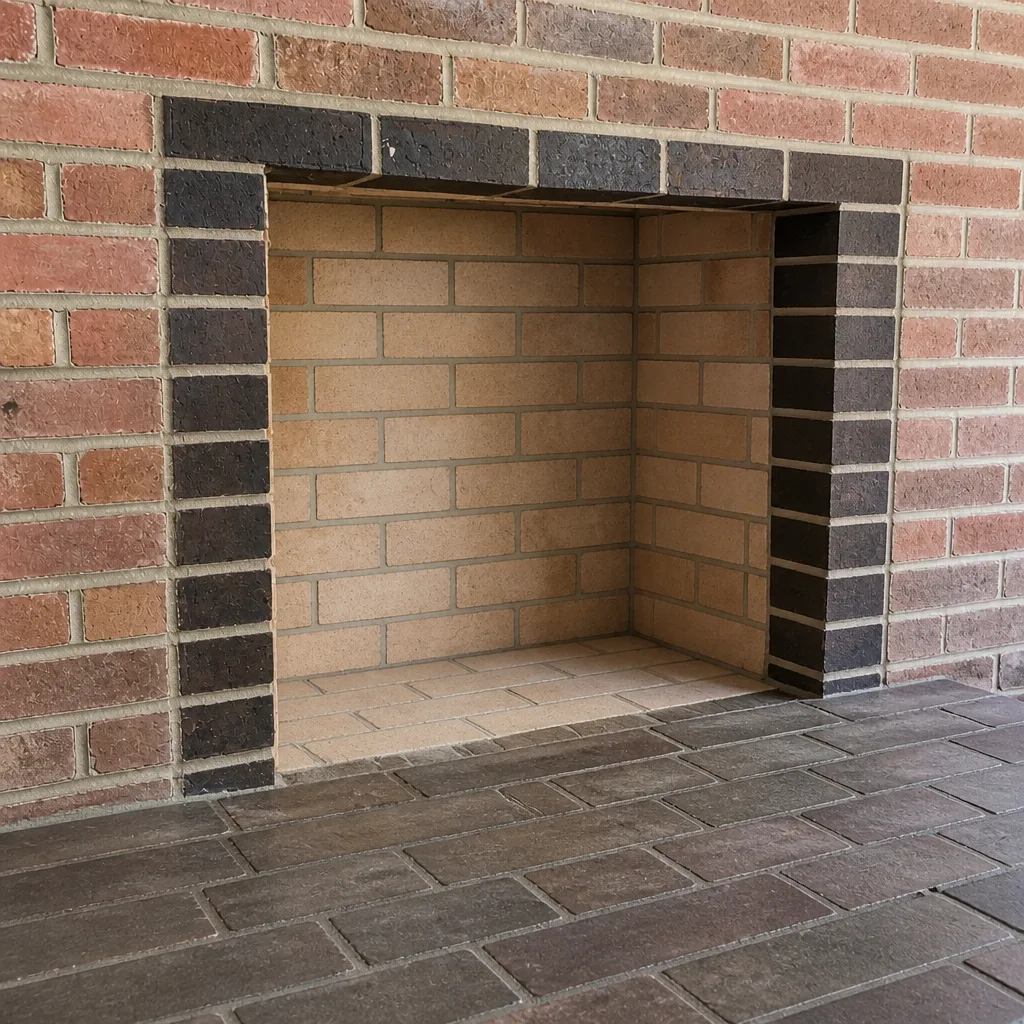
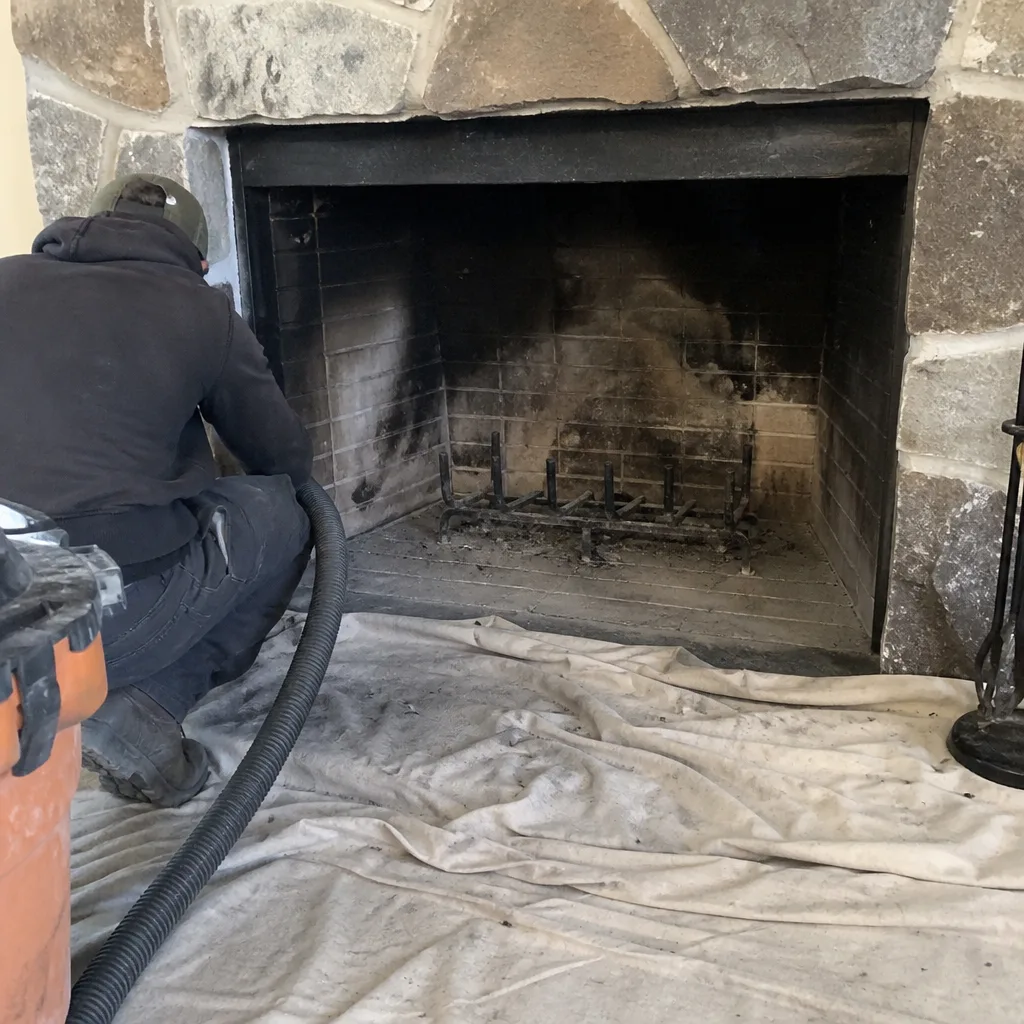
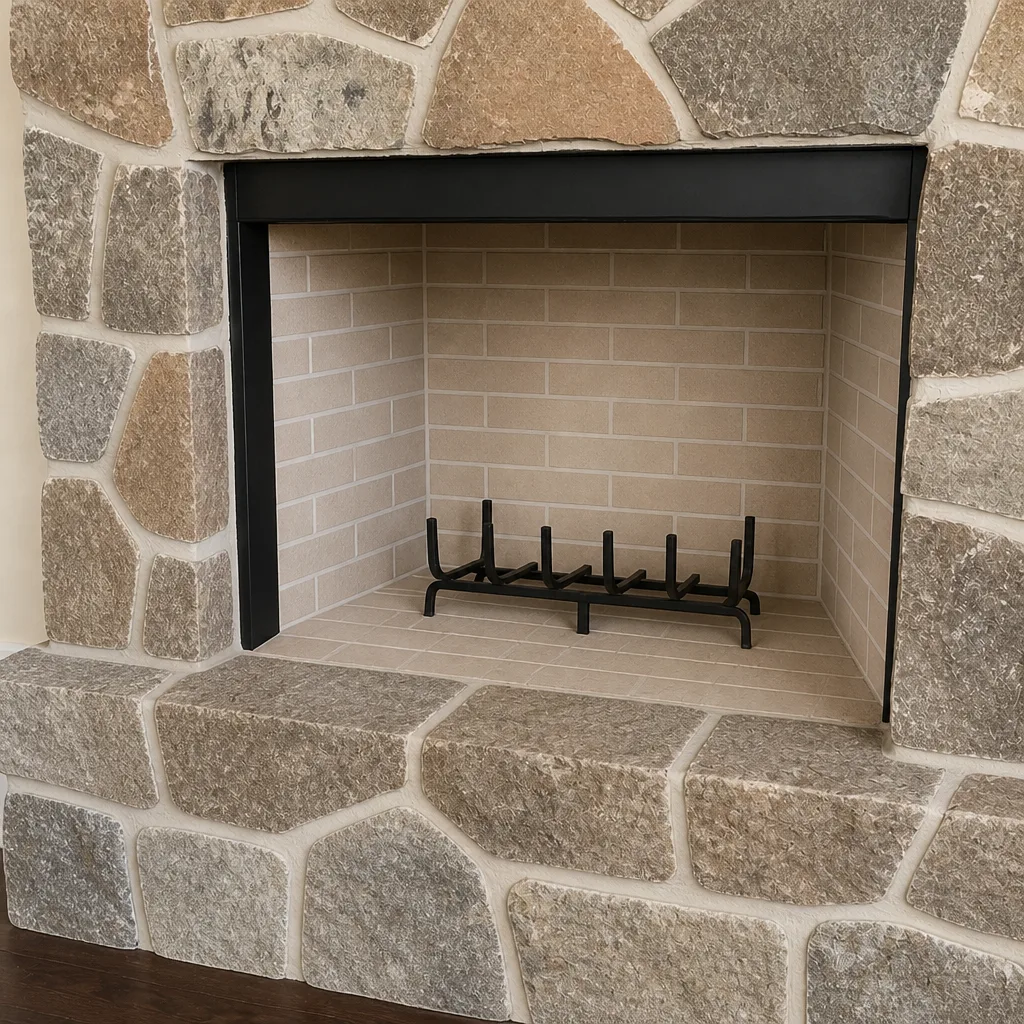
See the difference
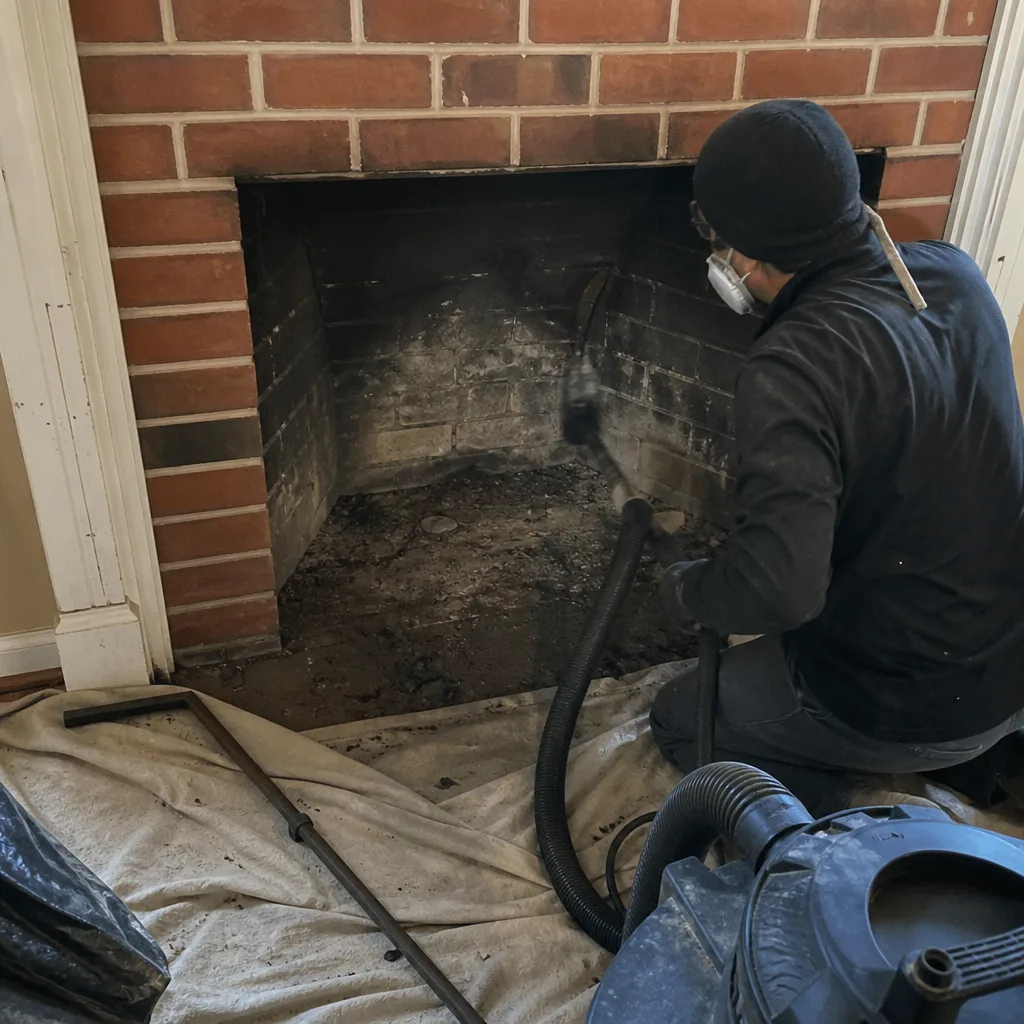 Before
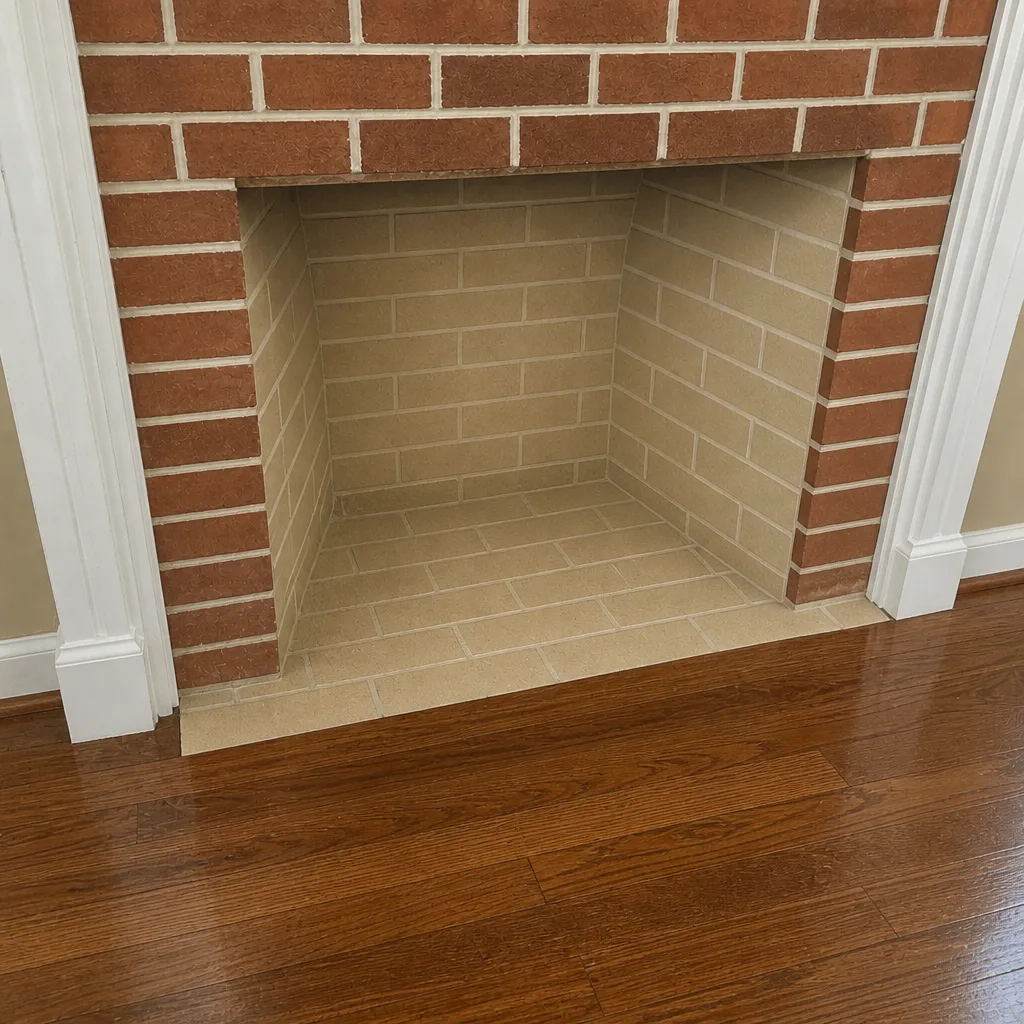 After
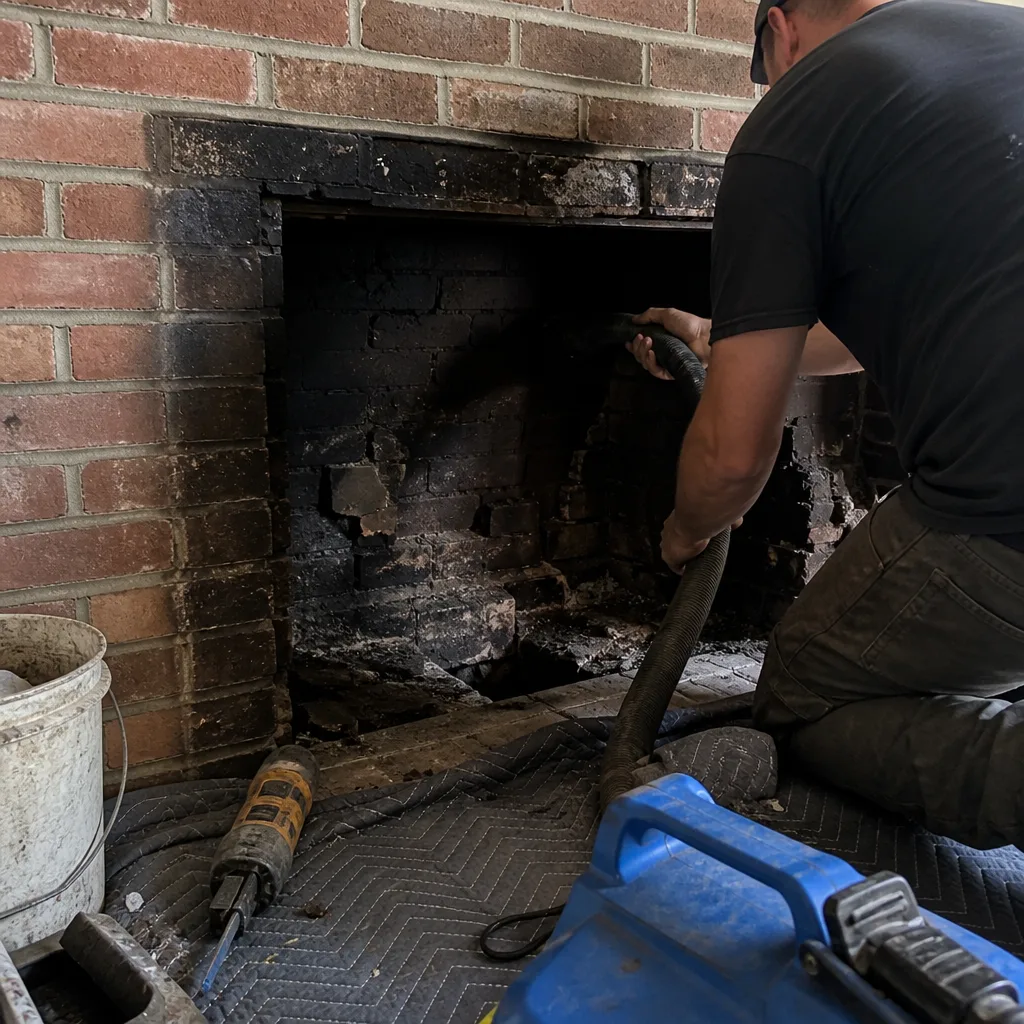 Before
 After
 Before
 After
When to Call a Professional
Call a professional if you haven’t had a sweep in more than a year, if you’ve had any chimney fire, if you’ve noticed smoke backing into the room, if there’s a visible crack in the firebox or smoke chamber, if the cap is missing or damaged, or if you’re buying or selling a home with a wood-burning appliance. Call if you smell gas near a gas appliance, if the firebox has rust or water stains, or if the liner looks pitted from inside. Chimney Sweep Hampton offers free estimates in Hampton. Call (833) 572-0756. We answer 24/7, with fast dispatch from 7am to 7pm, Sunday through Friday.
Frequently Asked Questions
Once a year for most wood-burning chimneys, and once a year for gas appliances as a safety inspection even though creosote isn’t the concern. Late spring is the smartest booking window because the season is over and any repair work can be scheduled without rushing. Call (833) 572-0756 for an exact quote. Estimates are free.
You need a Level 2 if there’s been any change to the chimney system: a new appliance, a new fuel type, a chimney fire, a property sale, or a major storm. It’s the only level that uses a camera through the full flue. Most Hampton chimneys benefit from one annually because of the moisture cycles between fires. Call (833) 572-0756 to book one.
Skipping a year usually doesn’t cause a problem if the chimney was clean when you stopped, but it does mean any early liner damage has a full extra season to worsen. In Hampton’s humid climate, that matters more because water sits on the liner between burns. If you’ve skipped, book the sweep and ask for a camera pass. Call (833) 572-0756.
No. The mild winter is exactly why Hampton chimneys need a sweep. The burn season stops and starts, which keeps the flue damp between fires and can push creosote from a light flake into a harder stage. A short season is not the same as a clean chimney. Call (833) 572-0756 for an honest assessment.
A sweep removes soot and creosote from the existing flue. A liner resurfacing, done with a product like HeatShield, restores a deteriorating liner wall without removing and replacing the whole liner. It’s the middle option between a clean and a full reline, and it’s only appropriate when the liner is spalling but still structurally sound. Call (833) 572-0756 to discuss which your chimney needs.
Typical pricing is low-to-mid triple digits for a standard sweep, with higher line items for rotary cleaning of heavier creosote, Level 2 camera inspection, liner resurfacing, or a full reline. The written estimate sets the final price, and the estimate is free. Call (833) 572-0756 for an exact quote.
The Bottom Line
A Hampton chimney is not a northern chimney, and treating it like one is the mistake that gets homeowners into trouble. The stop-start burn season and humid shoulder seasons create a moisture pattern that drives creosote from a light flake to a harder stage between fires. A yearly sweep in late spring, a Level 2 camera inspection whenever anything about the system changes, and a report with photos you can review yourself are what keep that cycle in check. We’re a chimney specialist, not a generalist who sweeps on the side, and we name the materials we use: Olympia Chimney, Famco, HeatShield, and Gelco, among others. Know what’s inside your chimney before winter hits. Call (833) 572-0756. We answer 24/7.
Written by the team at Chimney Sweep Hampton.