
Last updated November 16, 2026
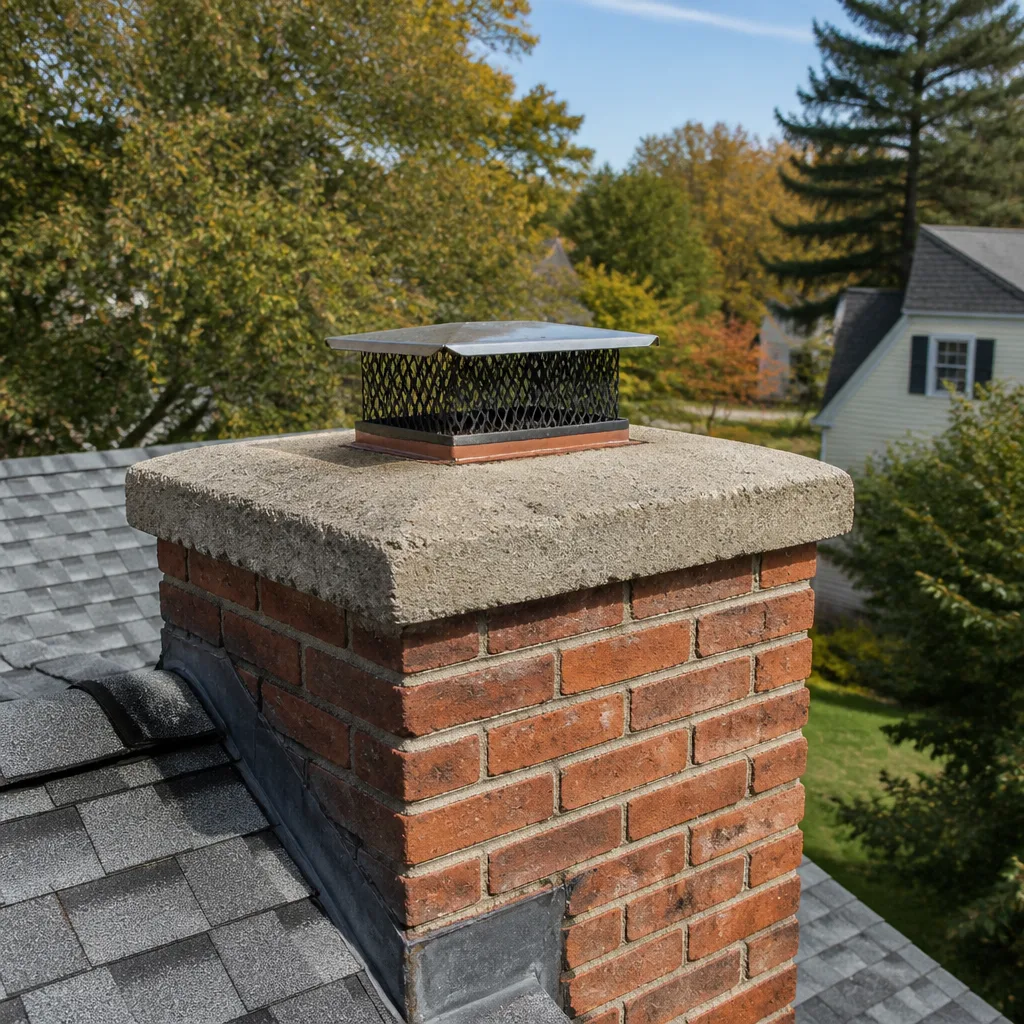 Sweep & inspection
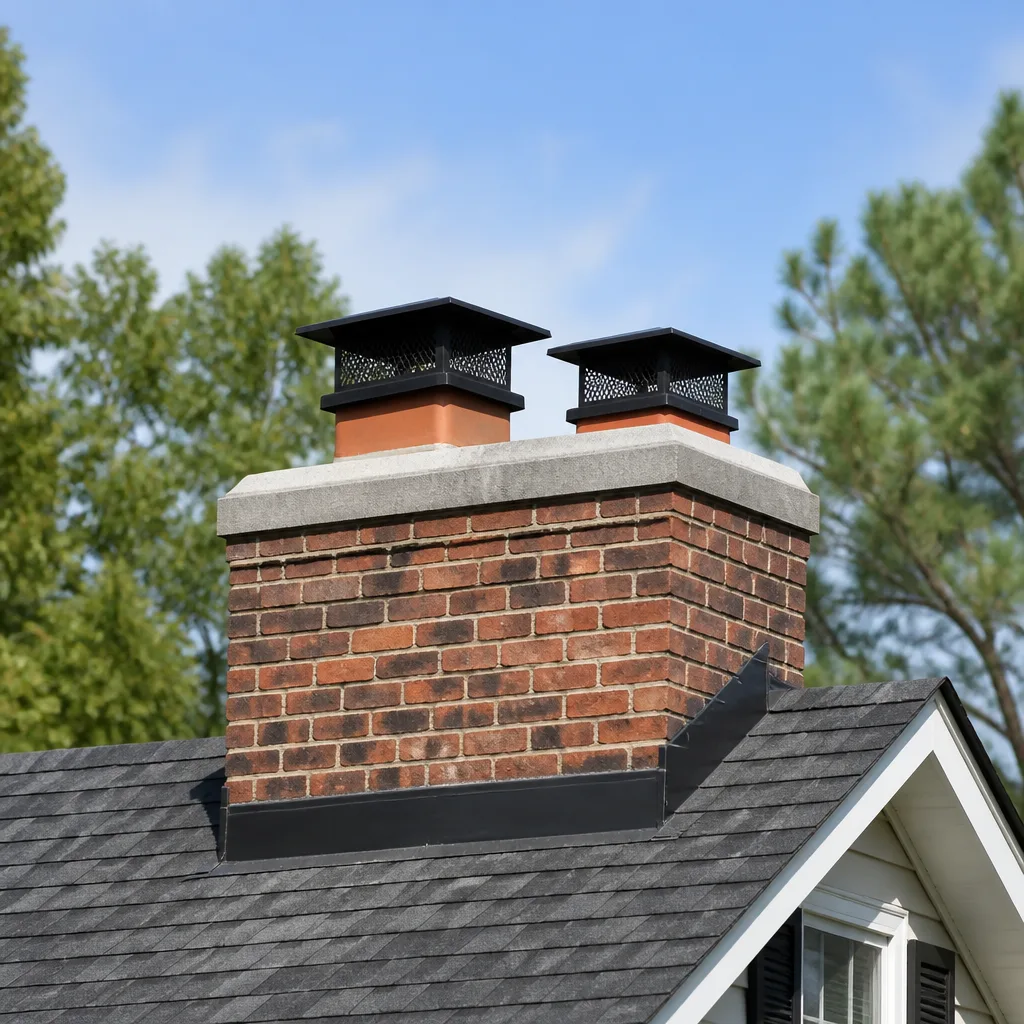 Caps & crowns
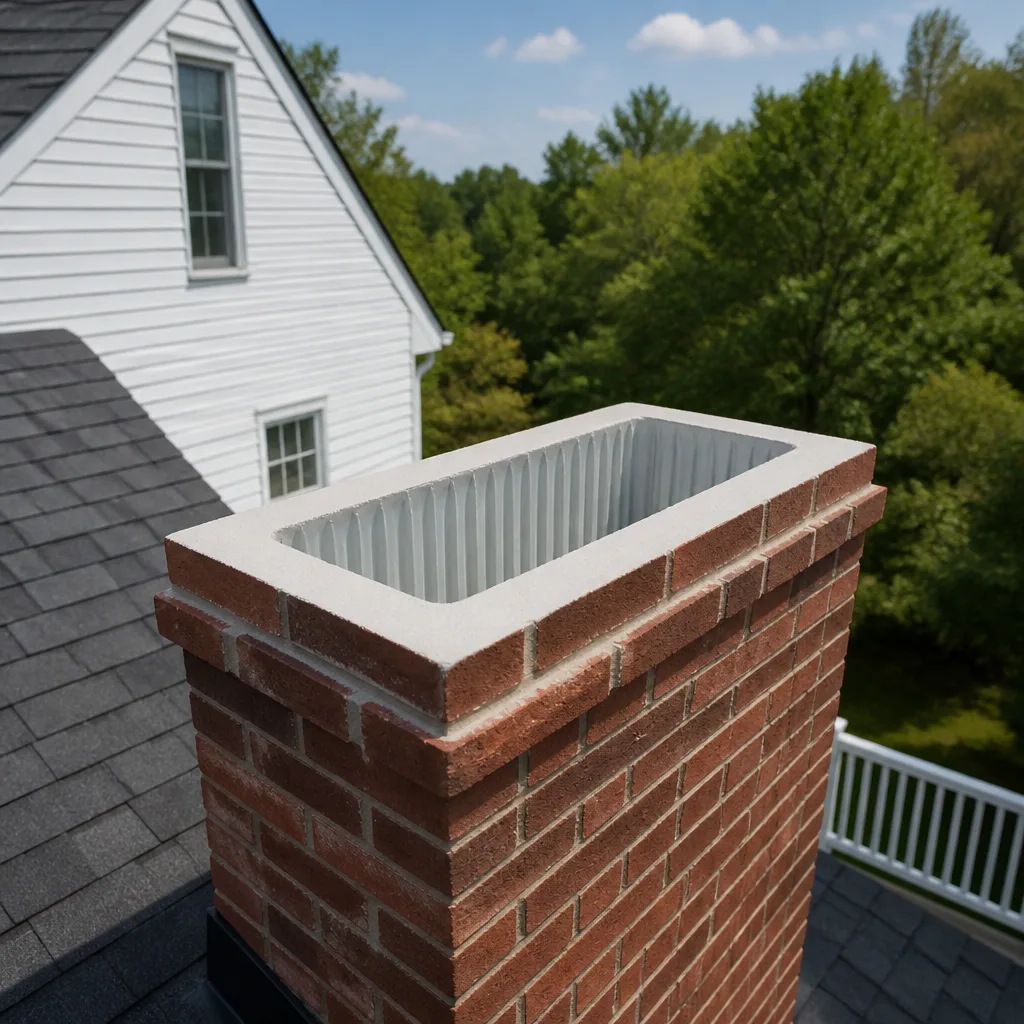 Flue relining
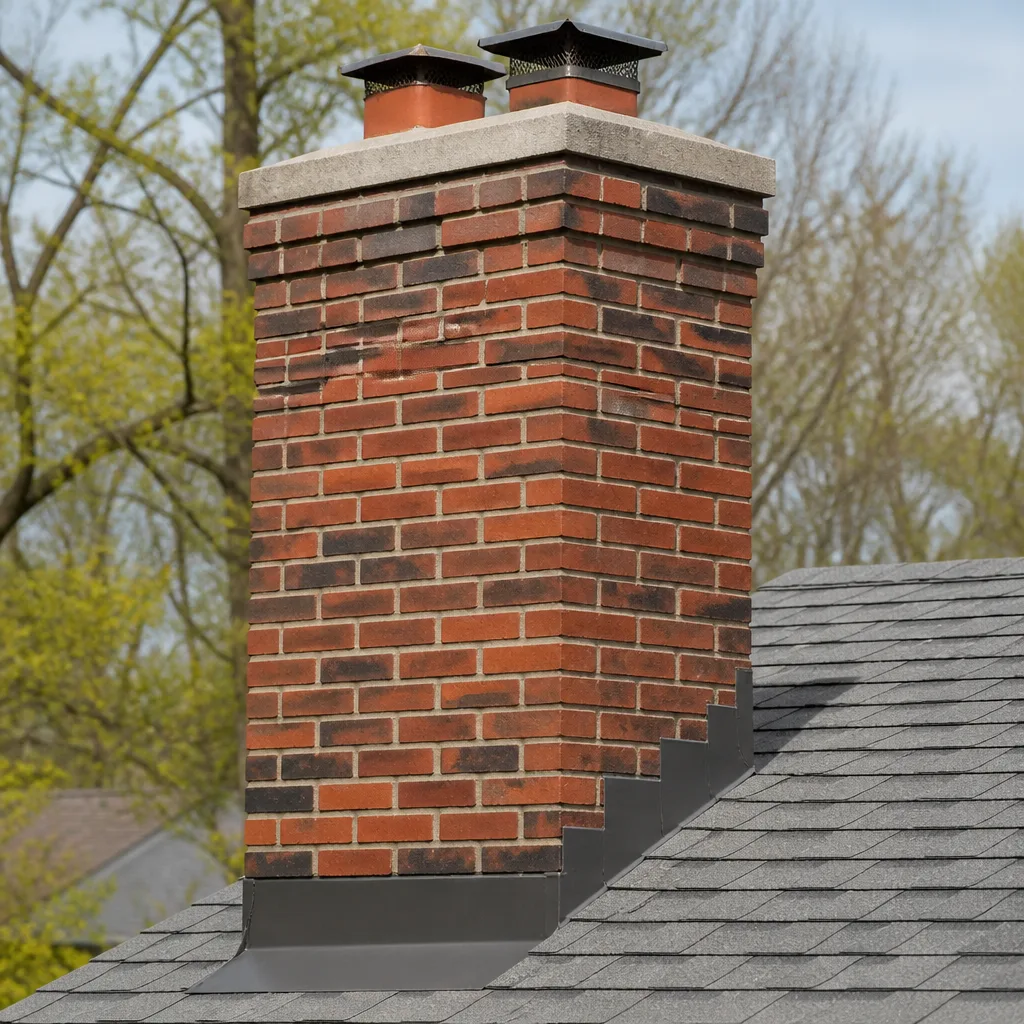 Masonry repair
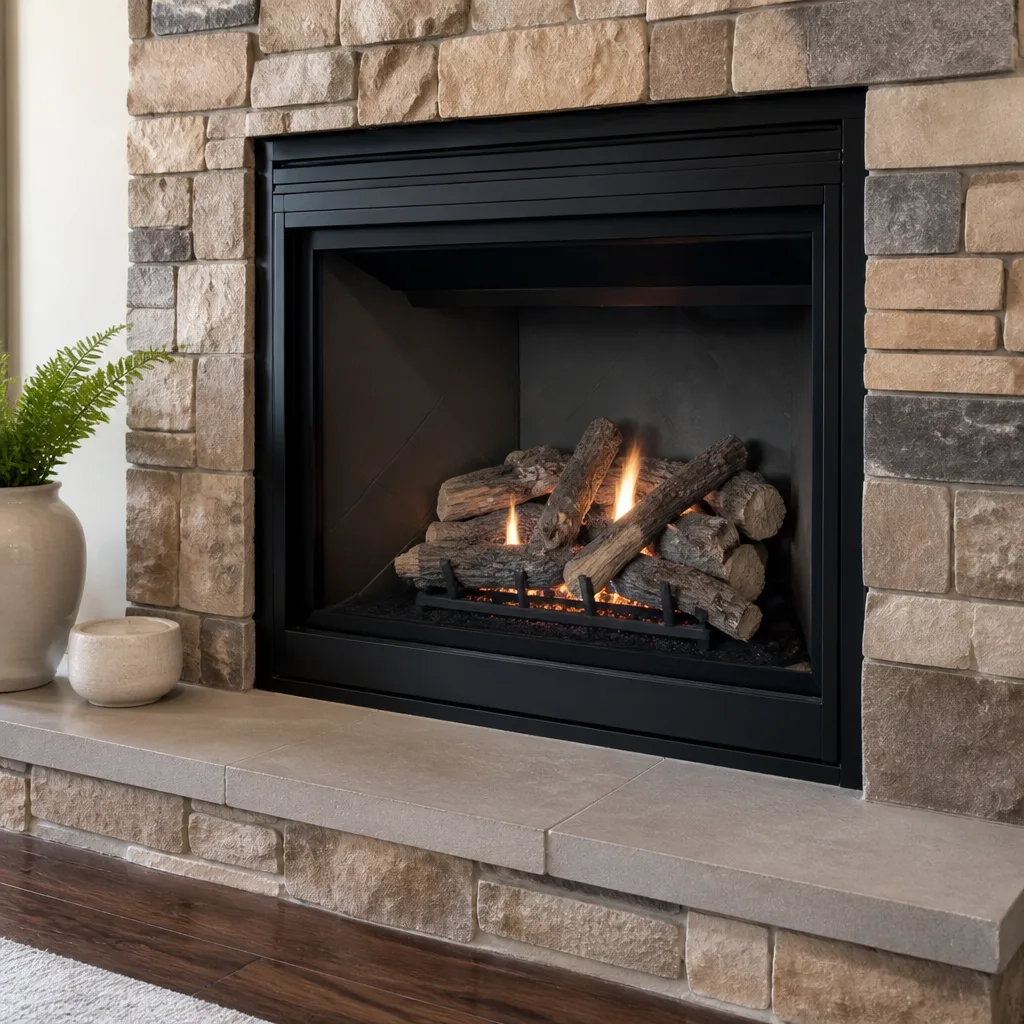 Gas fireplace service
Level 1 sweep and inspection to the NFPA 211 annual standard - flue, crown, cap, and flashing checked and photographed
Chimney sweep logs do not sweep chimneys. They loosen some creosote - which then falls where a brush and vacuum still have to collect it.
DIY vs Professional Chimney Cleaning: The Hampton Homeowner’s Decision Guide
You can sweep your own chimney. That’s not the interesting part. The interesting part is what happens after the brush comes out: most homeowners can’t tell a genuinely clean flue from one where stage-two creosote has glazed onto the tile in a glossy, tar-like layer a brush slides right over. The sweeping is the easy half. The reading of the flue is the half that takes training. In this guide we’ll walk through what a brush-and-rod kit actually accomplishes, what it misses, which parts of chimney care a Hampton homeowner can reasonably handle, and where DIY stops being a money-saver and starts being a risk you can’t see.
Quick Answer
DIY chimney sweeping is reasonable for light, routine flue brushing on a well-maintained chimney, but it does not replace a professional inspection – and it’s the inspection, not the brushing, that keeps your chimney safe. A hardware-store brush cannot remove glazed stage-two creosote, cannot see around offsets or through a camera, and cannot give you a documented assessment of your flue’s condition. For Hampton homes burning wood regularly, the honest split is: light cleaning is DIY-possible, but verification is professional work.
Styles & brands we work with
- Sweep & inspection
- Caps & crowns
- Flue relining
- Masonry repair
- Gas fireplace service
Table of Contents
- What DIY Chimney Brushing Actually Accomplishes
- Where Brush-and-Rod Kits Fall Short
- What a Hampton Homeowner Can Reasonably Handle Themselves
- Tasks That Require Trade Equipment
- Consumer Brush Kits vs Professional-Grade Products
- The One DIY Scenario That’s Riskier Than Doing Nothing
- Liability and Insurance When You Self-Certify a Chimney
- What a Professional Inspection Actually Documents
What DIY Chimney Brushing Actually Accomplishes
A brush-and-rod kit does one thing well, and it’s worth naming that honestly: it removes loose soot, ash, and the flaky, powdery first-stage creosote that builds up near the top of the flue on a chimney that’s been swept regularly. If your chimney has been cleaned every year and you burn dry, well-seasoned wood, a homeowner brushing between professional visits is not dangerous and does not damage the flue when done with the right brush for the liner material.
What a DIY brush does not do:
- It does not remove second-stage creosote, which is the hard, glossy, tar-like layer that bonds to tile or liner surfaces.
- It does not remove third-stage creosote, the baked-on glaze that requires rotary equipment or chemical treatment.
- It does not inspect for cracks, gaps, or deteriorated mortar joints, because a brush has no eyes.
- It does not verify clearances, cap condition, or crown integrity.
- It does not produce a written record of the flue’s condition you can hand to anyone.
Think of DIY brushing as removing material, not assessing it. Those are two different jobs that happen to happen in the same flue. A homeowner who brushes but never inspects has done half the work – and it’s the less important half. In Hampton, where wood-burning fireplaces are common and many homes have older masonry chimneys, regular brushing paired with a proper inspection is what actually keeps a flue in usable condition season after season. The chimney sweep visit exists precisely because it does both: clean and inspect in one pass with a written record.
Where Brush-and-Rod Kits Fall Short
Rotary systems and camera inspection are the two tools that separate a professional visit from a DIY one. Rotary cleaning uses a spinning head that contacts the flue wall with mechanical force, which means it can break up and lift glazed creosote that a hand-pushed brush just glides over. Camera inspection puts a light and lens down the flue so the technician sees the inside of the liner – every joint, offset, and transition – rather than guessing from the firebox.
Here’s the practical difference. A brush run tells you the brush went down and came back up. A rotary clean plus camera inspection tells you the flue is actually clear, the liner is intact, there are no hidden cracks behind soot staining, and the flue’s interior matches the appliance it serves. Those are not the same piece of information.
A few places where DIY kits genuinely fall short on Hampton chimneys:
- Offsets and bends. Older homes often have flues that step around a structural element. A straight brush doesn’t navigate an offset; a rotary cable does.
- Glaze. Stage-two and stage-three creosote need rotary or chemical action, not bristles.
- Liner transitions. Where a clay tile liner meets an insert connection, the joint is a point of failure that only a camera reliably shows.
- Post-clean verification. After rotary cleaning, a camera pass confirms nothing was left behind. After a DIY brush-out, there’s no way to know.
The core issue isn’t the brush. It’s that a brush cannot tell you what it saw. A camera can, and a trained technician reading the camera can explain what’s actually happening inside the flue.
What a Hampton Homeowner Can Reasonably Handle Themselves
There are genuine DIY tasks in chimney care, and it’s worth giving homeowners credit for them. These are the parts of chimney maintenance that don’t require trade equipment or a camera and that a careful homeowner can do safely between professional visits:
- Cap inspection. From the ground with binoculars, or from a safe ladder position without stepping onto the roof, check that the chimney cap is present, seated, and free of visible damage. A missing cap is one of the most common reasons water and animals get into a flue.
- Damper test. Open and close the damper by hand. It should move smoothly and seat fully. A damper that sticks open or won’t close all the way is a call-a-professional issue, but checking it is safe and worth doing before every burn season.
- Exterior visual check. Look for missing mortar at the crown, spalling brick, or a cap that’s tilted. Note what you see; leave the repair to a trade.
- Firebox ash cleanup. Scoop and dispose of ash in a metal container with a lid, well away from the house. This is routine housekeeping, not chimney work.
- Wood storage discipline. Keep firewood stacked outside and covered, and burn only dry, seasoned wood. This single habit does more to slow creosote buildup than any product you can buy.
These tasks don’t put you at risk and they don’t create false confidence, as long as you treat them as maintenance observations, not as certifications that the chimney is clean and safe. The gap between “I checked the cap” and “the flue is ready to burn” is wide, and only the second one matters for safety. If you want a second opinion on what you’ve observed, a chimney repair visit can confirm whether what you’re seeing needs action now or can wait.
Tasks That Require Trade Equipment
Some chimney work genuinely can’t be done by hand with a kit bag, and it’s worth being clear about the list so homeowners don’t waste money on consumer products that can’t do the job:
- Rotary creosote removal. Requires a rotary head, appropriate cable, and a power source – not a hardware-store hand kit.
- Camera inspection. Requires a camera reel, light, and a technician trained to read what’s on the screen.
- Liner resurfacing. Where mortar joints have deteriorated but the liner isn’t ready for replacement, HeatShield resurfacing restores the joint surfaces without a full reline. That’s a trade application, not a homeowner task.
- Full liner replacement. A DuraFlex liner system installation is a specialized job that involves sizing, connection, and clearance verification.
- Cap and crown work at height. Anything requiring stepping onto the roof or working at the top of the stack.
Notice what’s on that list: repair and verification. The plain flue brush sits outside it, which is exactly the honest boundary. Light cleaning is DIY-possible; everything that assesses, resurfacing, replaces, or installs is professional work. Our technicians have up to 9 years of experience with the full range of chimney systems, and the reason we work with trade-grade products like HeatShield and DuraFlex is that those products are the ones that actually solve the conditions a camera finds.
If what you’re seeing after a DIY attempt doesn’t feel right – staining you can’t explain, a draft that’s changed, a smell that won’t go away – that’s the moment to stop guessing and get someone to look with the right equipment. Call (833) 572-0756 and we’ll book a visit.
Consumer Brush Kits vs Professional-Grade Products
A hardware-store brush kit and a professional cleaning system look similar on the surface: both have a brush, both reach into the flue. The gap is in what they can do once they’re in there.
Consumer kits are typically built around a polypropylene or wire brush on flexible rods, sized for a standard flue, meant for light soot removal. They’re adequate for what they’re designed for – routine touch-up on a well-maintained chimney. What they’re not designed for is heavy creosote, rotary action, or navigating a flue with offsets. Pushing a consumer brush hard to try to break up glaze is a good way to bend rods, damage the liner at the joints, and eventually leave you with a flue that still isn’t clean and a liner that’s now compromised.
Professional systems are built around the condition, not the homeowner’s price point. Where we work with product lines like Gelco and Olympia Chimney, it’s because the categories that matter – caps, venting, liners, and connection components – have trade-grade versions that hold up to the actual conditions a flue presents. A Hampton chimney sees hot, humid summers and a burn season that can run from late fall into early spring, and the materials that last through that cycle are the ones built for it.
The honest takeaway on products:
- Buy a consumer brush kit if you’re doing light maintenance between professional visits on a clean chimney. Use the right brush for your liner material and stop when resistance increases.
- Do not buy a consumer kit expecting it to handle glazed creosote, restore a liner, or substitute for inspection. It can’t, and trying is how homeowners end up damaging tile.
- When a job needs a cap, a liner, a resurfacing layer, or a connection component, the difference between a consumer product and a trade-grade one is the difference between a stopgap and a fix.
The One DIY Scenario That’s Riskier Than Doing Nothing
There is a specific scenario where a DIY sweep does more harm than skipping the sweep entirely: a chimney with heavy or glazed creosote that a homeowner tries to force clean with a hand brush. Brushing partially removes the flaky outer layer and leaves the harder stage-two and stage-three deposit underneath, still bonded to the tile. It can leave the surface looking brushed and feels like progress. It is not a clean flue. And the homeowner now believes the flue is safer than it was, which is the part that matters: partial cleaning can create false confidence around a deposit load that was already high.
Hampton’s humidity profile is directly relevant to this. Warm, humid summers mean moisture lingers in masonry and in creosote deposits, and moisture changes creosote’s behavior – it makes deposits more prone to swelling, cracking, and re-bonding in denser layers. A chimney that gets partially cleaned in late summer, then sits through weeks of humid weather before burn season, can end up with deposits in worse shape than they were before the attempt. Meanwhile, the homeowner has ticked the “swept it” box and moved on.
The honest rule: if you’re going to DIY, do it on a chimney that’s been verified clean and is being maintained on a routine schedule. If you already know there’s heavy buildup, or you’ve never had the flue inspected, brushing part of it yourself and calling it done is the one DIY move we’d steer you away from. That’s the scenario where an inspection first saves you work and risk rather than adding cost.
Liability and Insurance When You Self-Certify a Chimney
Here’s a part of the DIY conversation that rarely makes it into homeowner forums: the documentation side. When a homeowner brushes their own chimney, there is no written record of the flue’s condition, no proof the work was done to any standard, and no independent party who can say what was observed. In a claim scenario, that gap matters.
Virginia doesn’t require a homeowner to hire a professional to sweep their own chimney, and nothing in this guide implies otherwise. But if a chimney fire, carbon monoxide incident, or water intrusion leads to an insurance claim, the insurance company is going to ask what maintenance was done and what condition the chimney was in. A self-swept chimney with no paperwork behind it is a harder claim to support than a chimney with a documented professional inspection, a written report, and a camera record of the flue’s condition on file. We’re not insurers and we can’t tell you how any particular claim will go – but we can tell you that the documentation side of professional chimney care exists for a reason, and it’s not the sweeping, it’s the record.
In practical terms, a documented professional inspection gives you:
- A written record of what was observed inside the flue on the date of the visit.
- A camera photo record you can keep with your home maintenance file.
- A clear written statement of what was found and what, if anything, needs to be done – with the option to decline work that can safely wait.
- Something to hand a buyer if you sell the home, or your insurer if a claim arises.
None of that is available from a DIY brush. That’s not a knock on DIY – it’s just a different category of activity, and the trade-off is real.
What a Professional Inspection Actually Documents
It’s worth pulling apart what an inspection is so the comparison to DIY is fair. A professional inspection is not a sweep plus a quick look. It’s a structured assessment, and in our case it includes camera inspection and a photo report, so the homeowner sees what we saw.
Here’s how a typical inspection visit goes:
- Exterior and cap check. Crown, cap, flashing, and visible masonry at the top of the stack.
- Firebox and damper. Condition of the firebox surfaces, damper operation, and any signs of smoke or water intrusion.
- Flue condition via camera. The inside of the liner, joints, transitions, and any appliance connections.
- Clearance verification. That the flue and connections meet the clearances required for what’s burning in the appliance.
- Written report with photos. What was observed, what’s fine, what needs attention, and what can safely wait.
The last point is the one homeowners care most about. A chimney inspection shouldn’t feel like a sales pitch, and it shouldn’t leave you wondering whether the recommended repair is real. When the recommendation is backed by camera photos you can look at, and the technician can say plainly whether something is urgent or can wait a season, the conversation stops being about trust and starts being about evidence. If resurfacing or relining is on the table, the materials matter as much as the diagnosis – which is why we name the products we work with rather than leaving it vague.
Chimney Sweep Hampton handles sweeping, repair, and inspection as a single service loop, which matters because the person diagnosing is the person who can follow through. No coordinating three contractors. No gap between the report and the fix. The Chimney Sweep Hampton team does the assessment, and the same company can carry out the work the assessment calls for.
Common Mistakes to Avoid
- Treating a brush pass as a clean flue. A brushed chimney that still has glazed creosote is not clean, and the risk is that the homeowner stops worrying about it. If you can’t explain what was inside the flue when you finished, you haven’t verified anything.
- Using the wrong brush for the liner. A wire brush can score certain liner surfaces. Match the brush to the material – and if you’re not sure what your liner is, don’t guess, ask before you buy the brush.
- Cleaning in late summer and leaving the flue humid. Hampton’s humid weather is hard on a chimney that’s just been brushed and left until burn season. If you clean DIY, either do it right before the burn season or make sure the flue is genuinely dry before you stop checking on it.
- Skipping the cap check. A missing or damaged cap is one of the most common causes of water damage and animal intrusion into a Hampton flue. It’s a 30-second check from the ground and worth doing every season.
- Self-certifying and moving on. The lack of a written record is real. If a claim ever comes up, “I brushed it myself” doesn’t carry the same weight as a documented inspection with photos.
- Forcing a brush through a resistance point. When the brush stops moving freely, running it harder can bend rods and damage the liner at joints. Stop and get the flue looked at.
- Assuming a gas insert means you can skip chimney care. Gas appliances still have venting and connection points that need inspection. The maintenance routine changes, it doesn’t disappear.
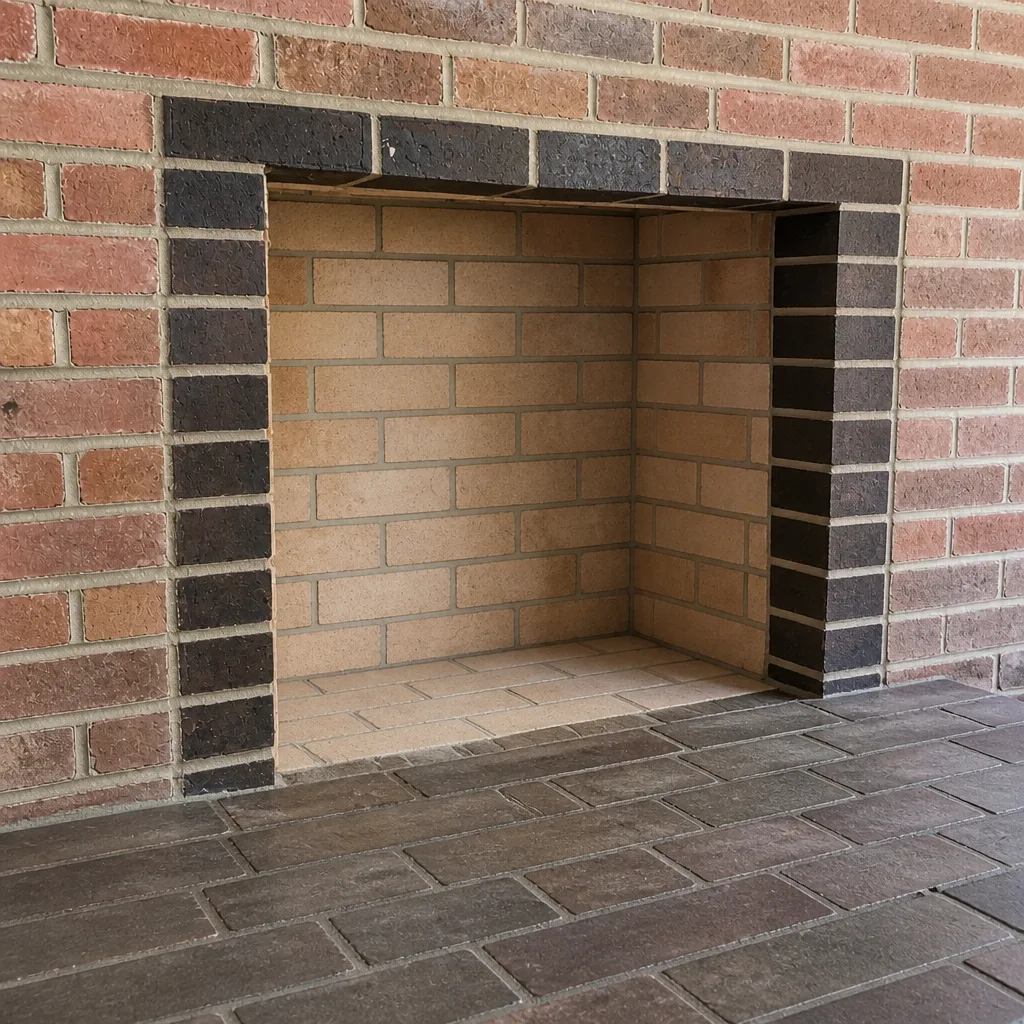
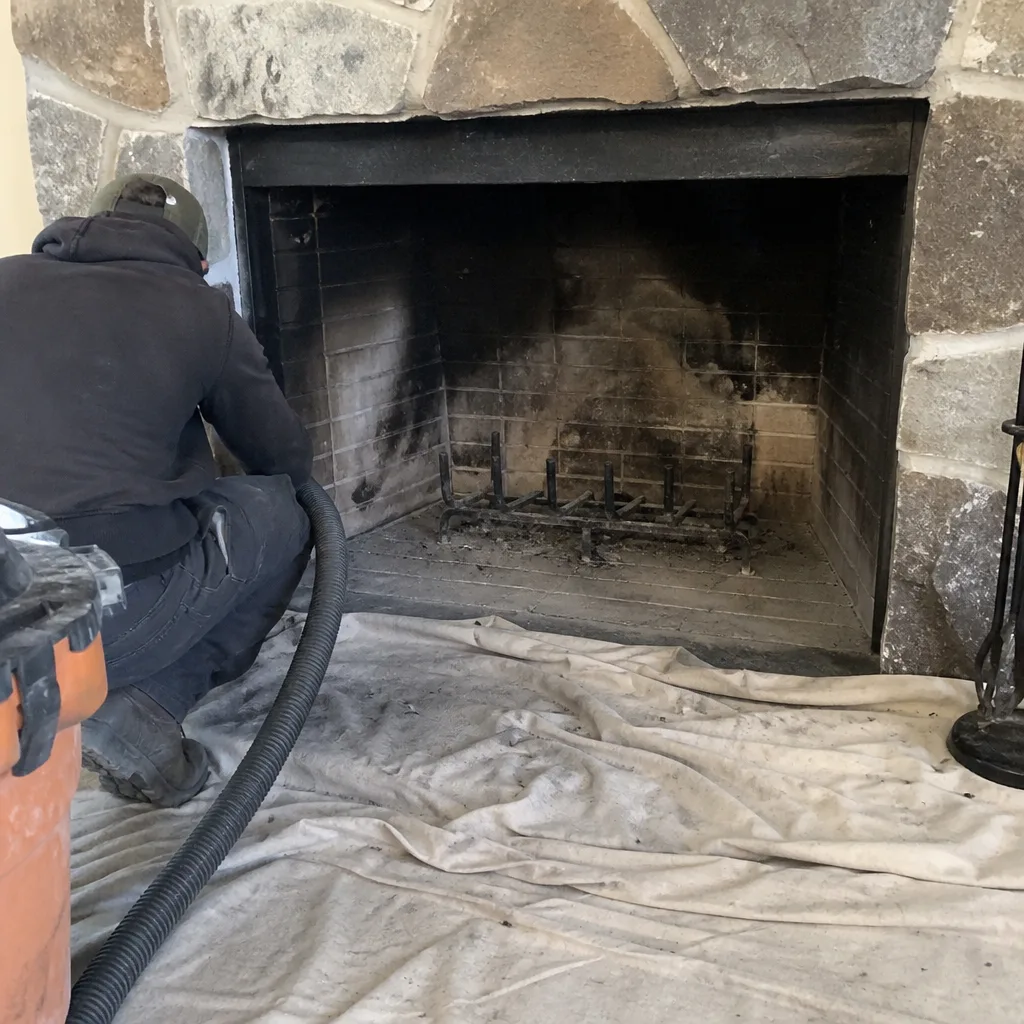
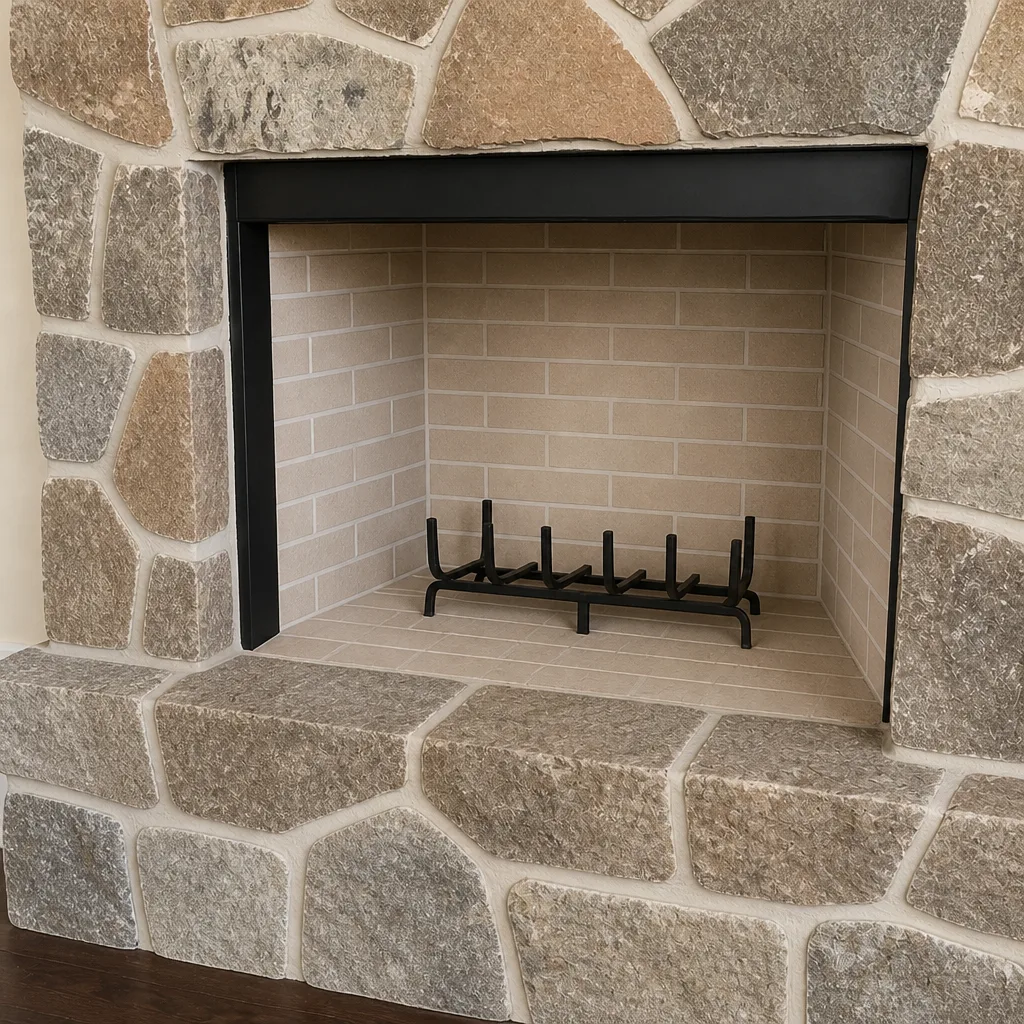
See the difference
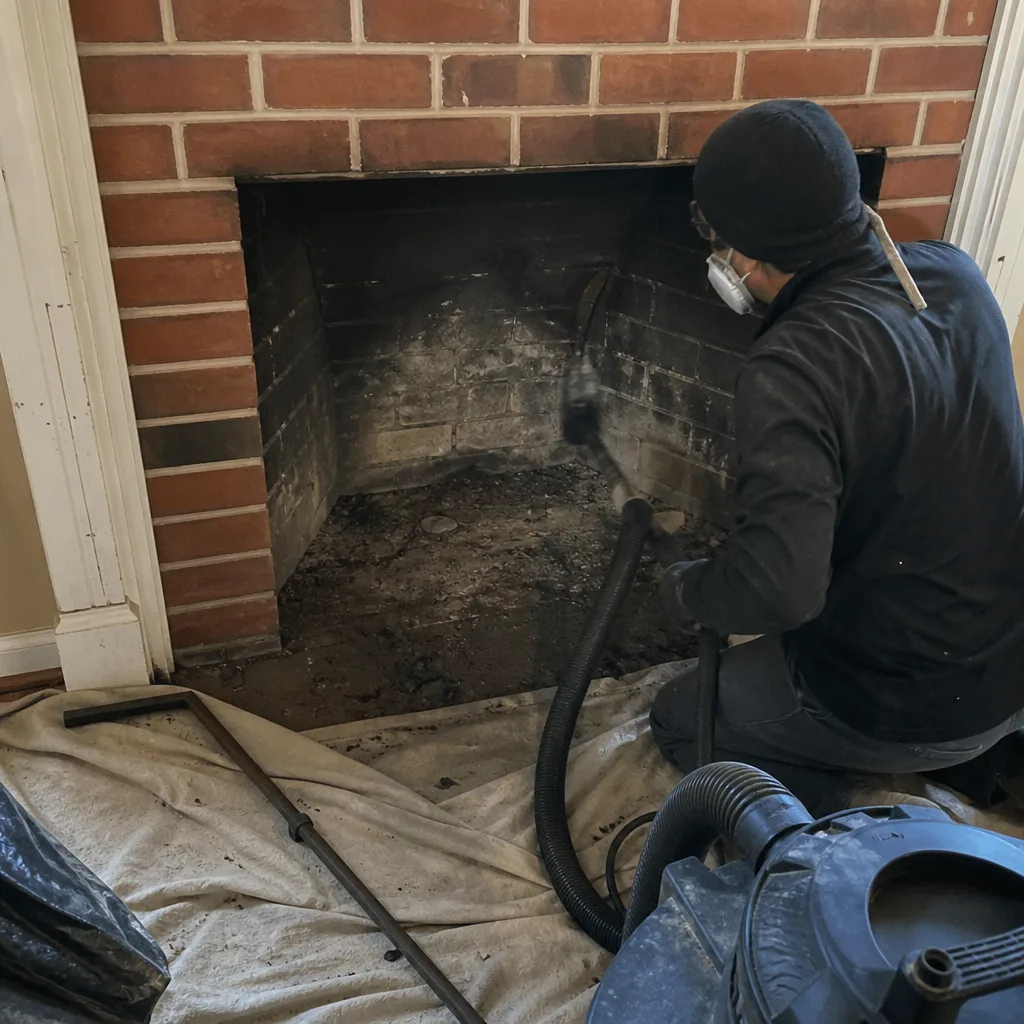 Before
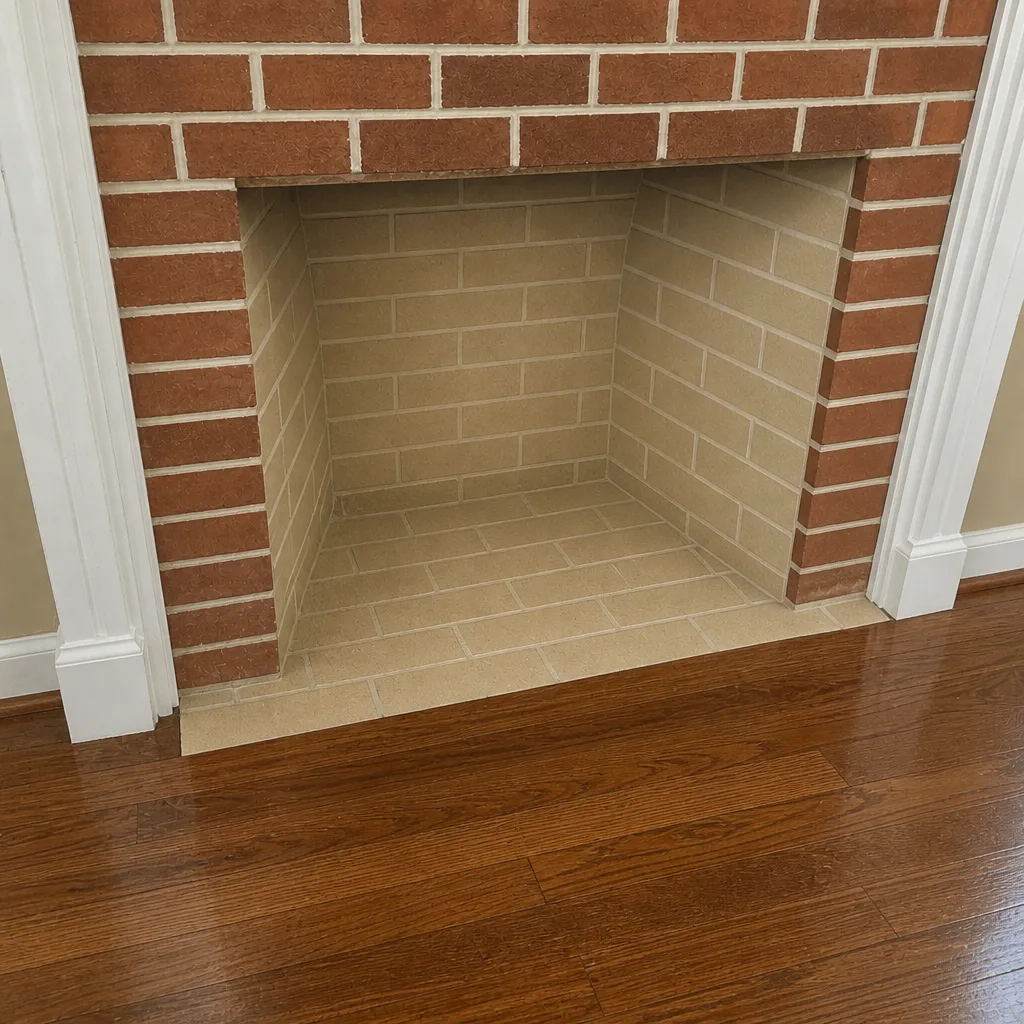 After
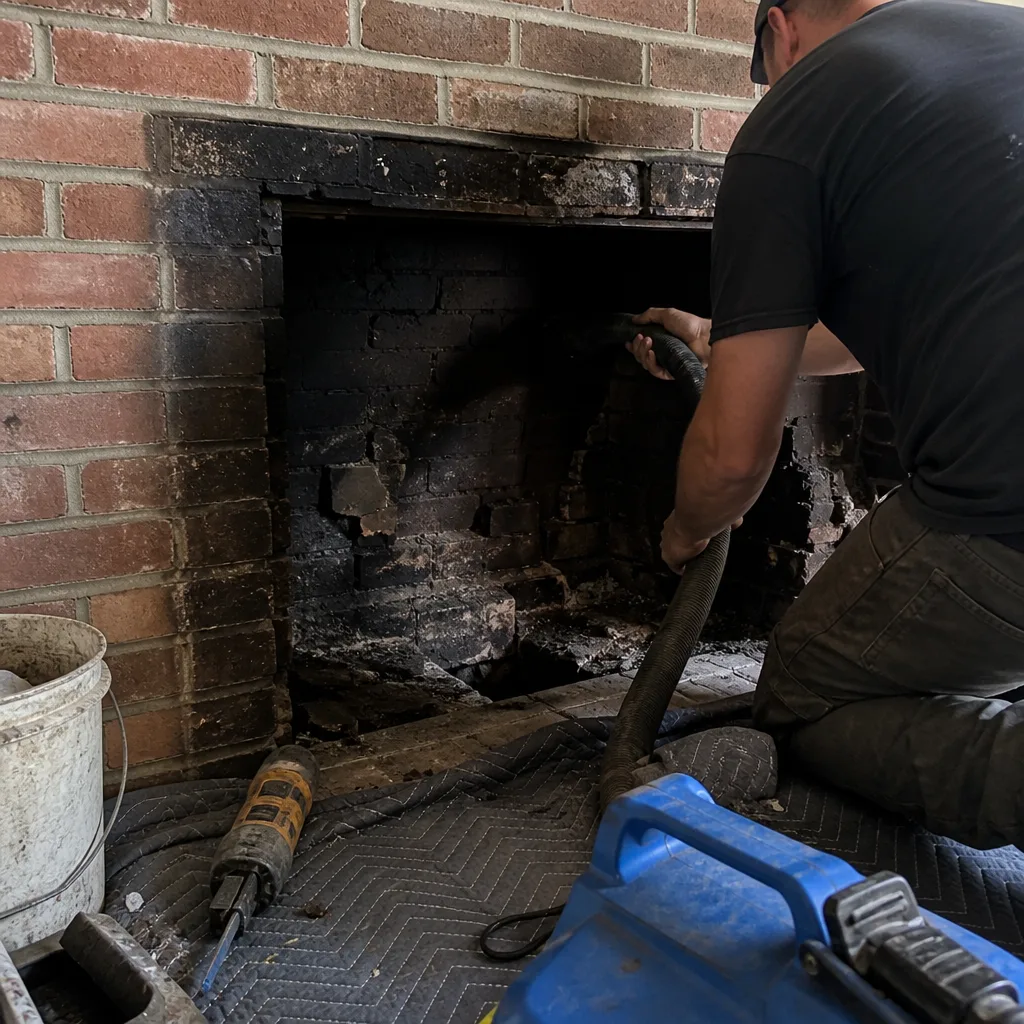 Before
 After
 Before
 After
When to Call a Professional
Call a professional when you haven’t had the flue inspected in a year, when you smell a strong creosote odor on warm days, when the draft has changed from previous seasons, when there’s visible staining around the firebox or on the chimney exterior, or when you already know there’s heavy buildup. Call when you want a written record for your insurer or a future sale. Call when you’ve tried DIY brushing and can’t honestly say what you removed – that uncertainty is the signal. Chimney Sweep Hampton offers free estimates in Hampton – call (833) 572-0756. We answer 24/7. Fast dispatch from 7am to 7pm, Sunday through Friday. A call outside dispatch hours is booked into the next opening. If the question is simply whether a sweep or a repair is needed, the inspection answers it with a camera record and a flat price agreed before any work is booked.
Frequently Asked Questions
Yes, in the sense that light brushing with a correctly sized consumer kit is not dangerous and is legal for a homeowner to do. What DIY brushing can’t do is remove glazed creosote, navigate offsets, or verify the condition of the liner, so it isn’t a substitute for inspection. If your chimney has been recently inspected and maintained, light DIY brushing between visits is reasonable.
A DIY brush removes soot and loose first-stage creosote; a professional sweep uses rotary equipment to address glazed deposits and pairs the cleaning with a camera inspection that documents what was found. The difference comes down to what each can remove and what each can see. If the question is “is the flue clean and safe,” only the professional visit produces a verified answer.
Yes – regular professional inspection is the part of chimney care that most directly affects safety. A brush tells you a rod went down and came back up; an inspection tells you what the liner looks like from the inside, whether the joints and connections are intact, and whether anything needs attention. Without an inspection record, you don’t actually know the condition of the flue. Call (833) 572-0756 to book one with a camera photo report included.
Partial cleaning can leave the hardest creosote deposits bonded to the liner while lowering the visible buildup, which creates a false sense of safety. In Hampton’s humid summers, leftover deposits can swell and re-bond into denser layers before burn season. If you can’t confirm the flue is genuinely clean, the partial attempt is the one DIY scenario we’d steer you away from. Call (833) 572-0756 for an inspection first.
The lack of a written record matters more than the act of sweeping itself. Insurance claims involving a chimney will typically ask what maintenance was performed and what condition the chimney was in, and a documented professional inspection with photos supports that answer where a self-swept chimney leaves nothing on file. We can’t speak to any specific claim outcome, but the documentation is the point of the professional record.
Consumer brush kits are fine for light routine brushing on a clean, well-maintained flue; they aren’t designed to handle glazed creosote or liner issues, and forcing them can damage the liner. Professional work draws on trade-grade product lines – among others we work with HeatShield for liner resurfacing and DuraFlex for relining – because those products solve conditions that a brush can’t. For a Hampton chimney, the right call is usually a professional inspection first, then a decision on materials based on what the camera found.
The Bottom Line
DIY chimney cleaning is not the villain here – light brushing between professional visits is a legitimate, safe maintenance habit for a disciplined homeowner on a clean flue. But the value of chimney care isn’t in the brush, it’s in the seeing: camera inspection, liner assessment, and a written record of what was found. That’s the part that takes training and equipment, and it’s the part that keeps a Hampton chimney safe through burn season. If you’re going to do the DIY piece, don’t skip the professional piece – and if you’re not sure which you need, an inspection answers the question without guesswork.
Chimney Sweep Hampton handles sweep, inspect, and repair as one service, so what’s found and what’s done stay connected. We name the products we work with because materials matter as much as the diagnosis. Call (833) 572-0756 for a free estimate. We answer 24/7. Fast dispatch from 7am to 7pm, Sunday through Friday, and we’re closed on Saturday. A flat price is agreed before the work is booked, and nothing is recommended that isn’t backed by camera photos you can see for yourself.
Written by the team at Chimney Sweep Hampton.